Introduction
Architectural Trends in Post-Depression Palm Beach
In the mid-1930s, Palm Beach entered a quiet but decisive transformation. The era of fleeting winter spectacle was fading, and a new rhythm of year-round living began to take hold. Families stayed longer, seasons stretched from weeks to months, and the island slowly shifted from resort enclave to genuine community.
Architecture led the way. The towering Mediterranean Revival showplaces of the 1920s gave way to refined, livable houses shaped by Colonial Revival, Bermudian, Georgian, and Monterey influences. Modest in scale but rich in craft, these homes lined emerging neighborhoods like Pendleton Avenue and Queens Lane, where unified streetscapes reflected a new desire for privacy, permanence, and belonging.
This exhibition follows that turning point—from national movements promoting modest, well-designed houses to Palm Beach’s own experiments with simplicity and grace. Together, these buildings reveal an island redefining itself, trading spectacle for home, and planting the roots of community in its architecture.
Credits
Curated by Keren Blatt, Archivist & Katie Jacob, Vice President
Archival images & artifacts from the Preservation Foundation of Palm Beach Archives unless otherwise stated
Generously underwritten by CrowderGulf, LLC 
National & Local Context
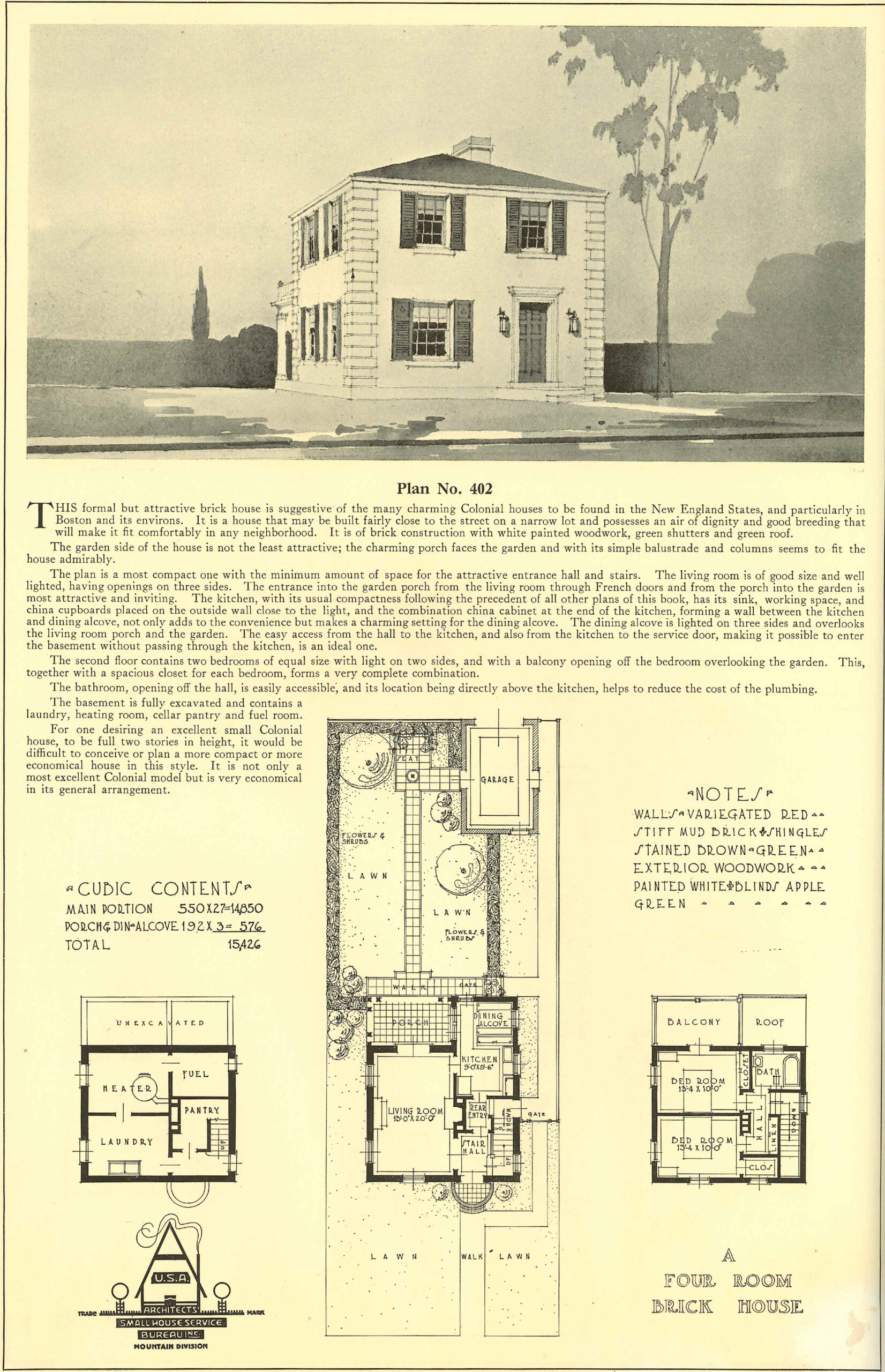
National Context: Better Homes in America Movement, Architects’ Small House Service Bureau
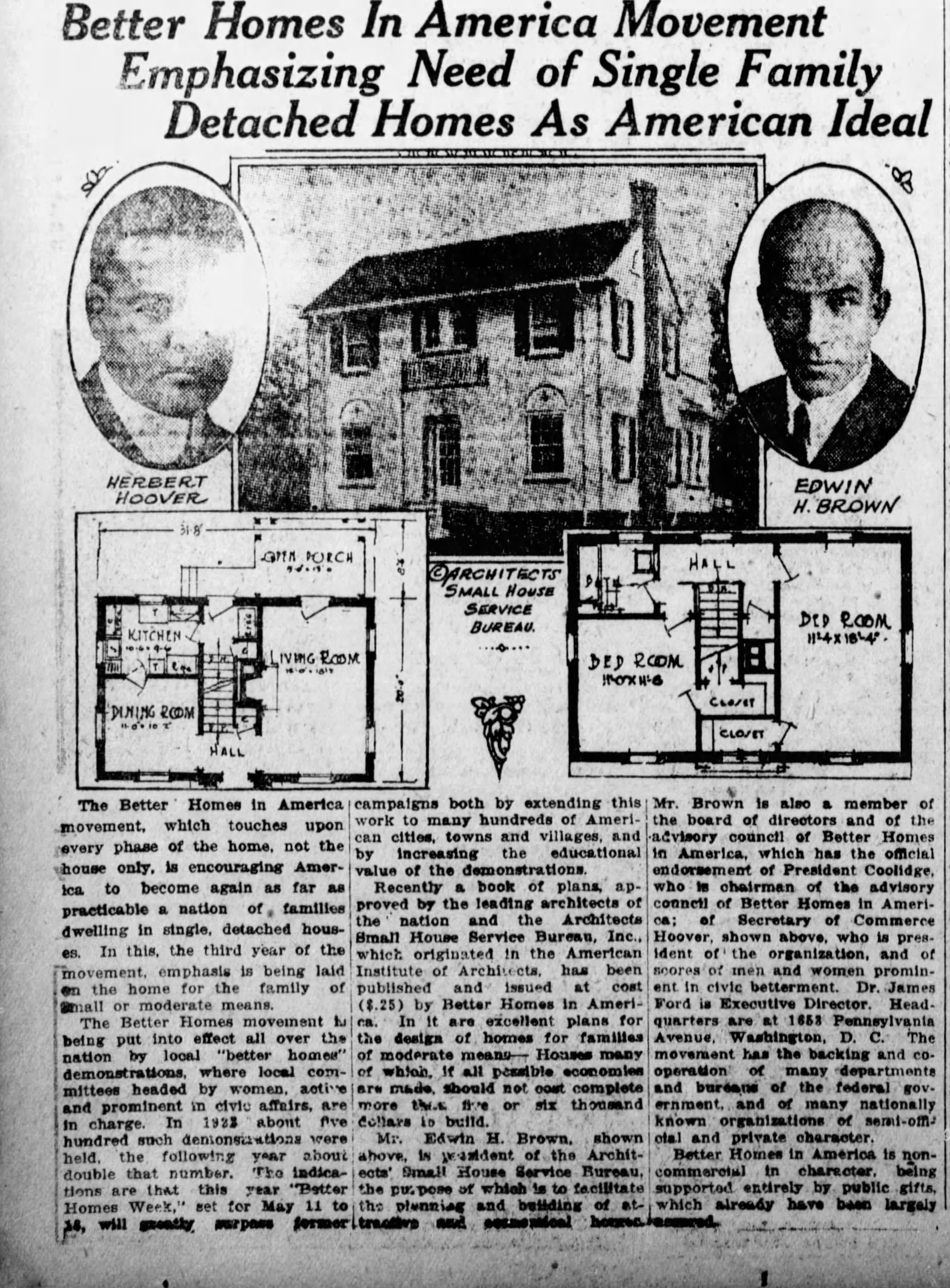
In the years after World War I, a national housing shortage, the economic strain of the Great Depression, and New Deal loan programs shifted American focus to small, affordable, well-designed homes. Movements like Better Homes in America (1922–1935), championed by President Calvin Coolidge and Secretary Herbert Hoover, educated on the benefits of home ownership through conferences, brochures, and widely circulated model Colonial Revival designs. At the same time, the Architects’ Small House Service Bureau (1919–1942) promoted professionally drafted house plans and regional architectural identities, distributing designs and sharing guidance nationwide through books, pamphlets, and its Small House magazine.
Local Context: Palm Beach’s Post- Depression Building Boom
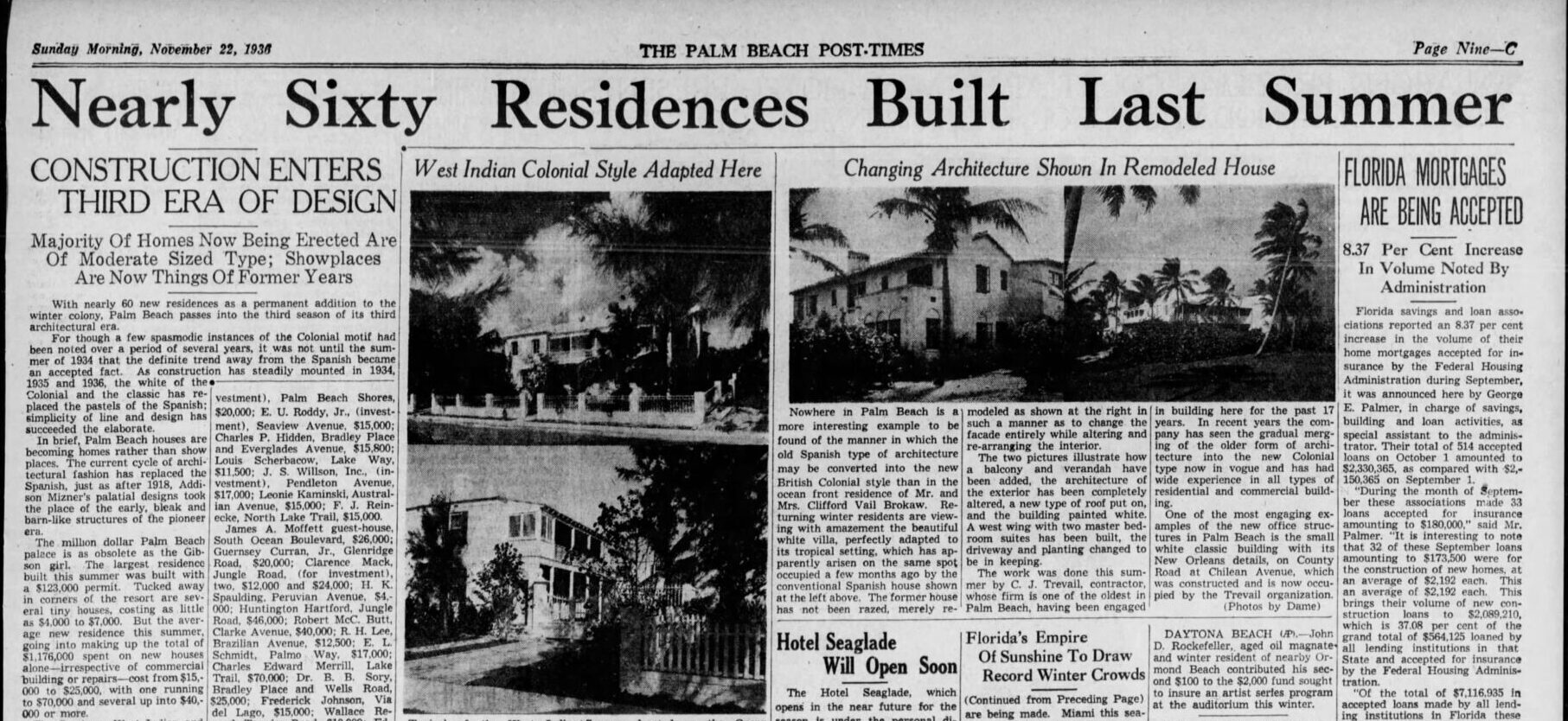
Palm Beach entered the 1930s shaped not only by the Great Depression but also by the development bust that followed the devastating 1928 hurricane. Even as the island escaped lasting economic hardship, national sentiment discouraged overt displays of wealth. As historian Donald Curl observed,
“incidents like the Veterans’ Bonus March, the calls for national economic reforms, the New Deal programs… and especially the increase in income taxes convinced many that flaunting one’s wealth was no longer good policy.”
Architectural taste shifted accordingly, replacing Mizner’s grand Mediterranean Revival with the quieter elegance of Georgian Revival, Tropical Colonial, and Monterey.
Clifford V. Brokaw Residence: From Mediterranean REvival to British Colonial
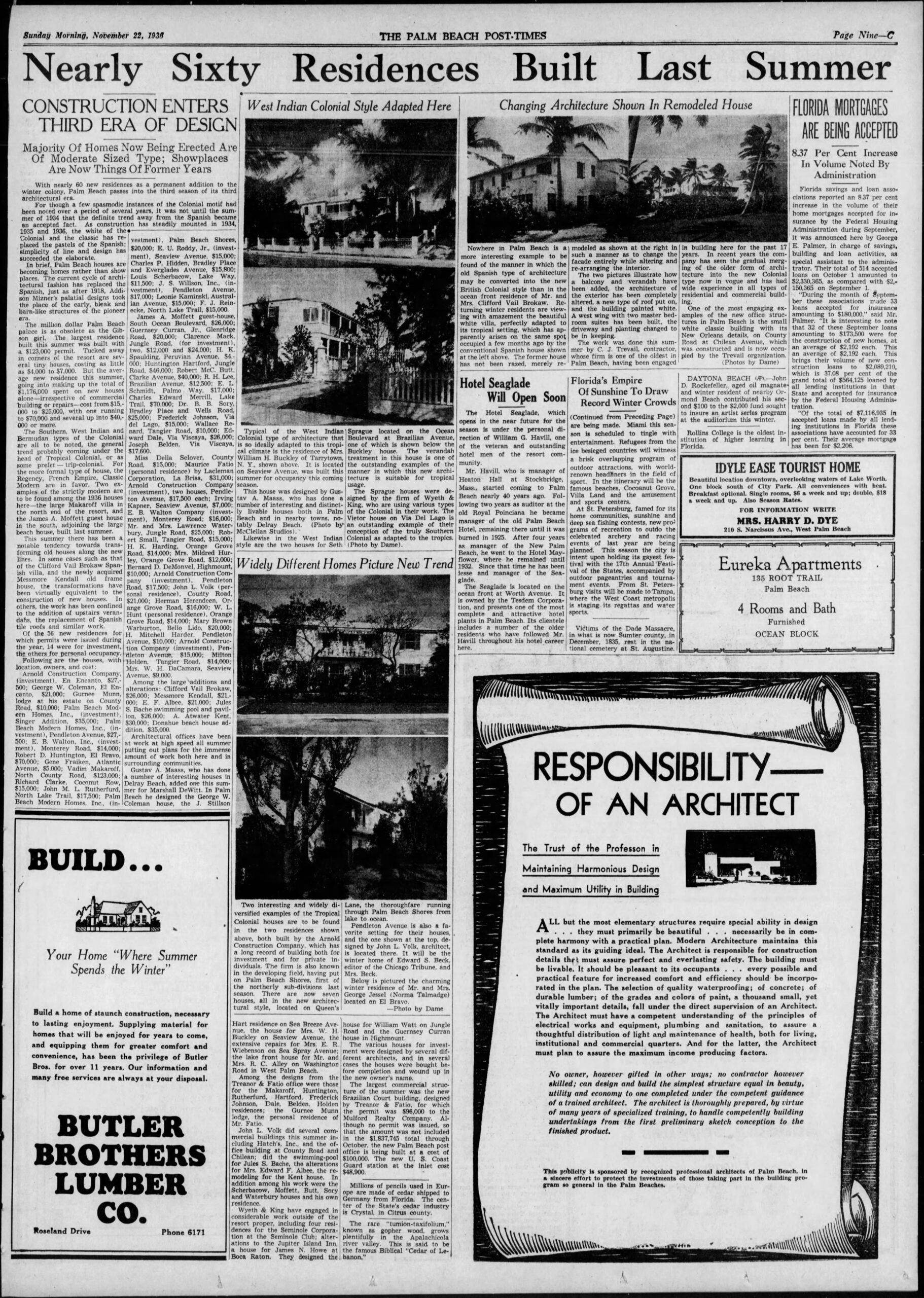
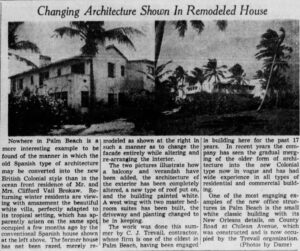
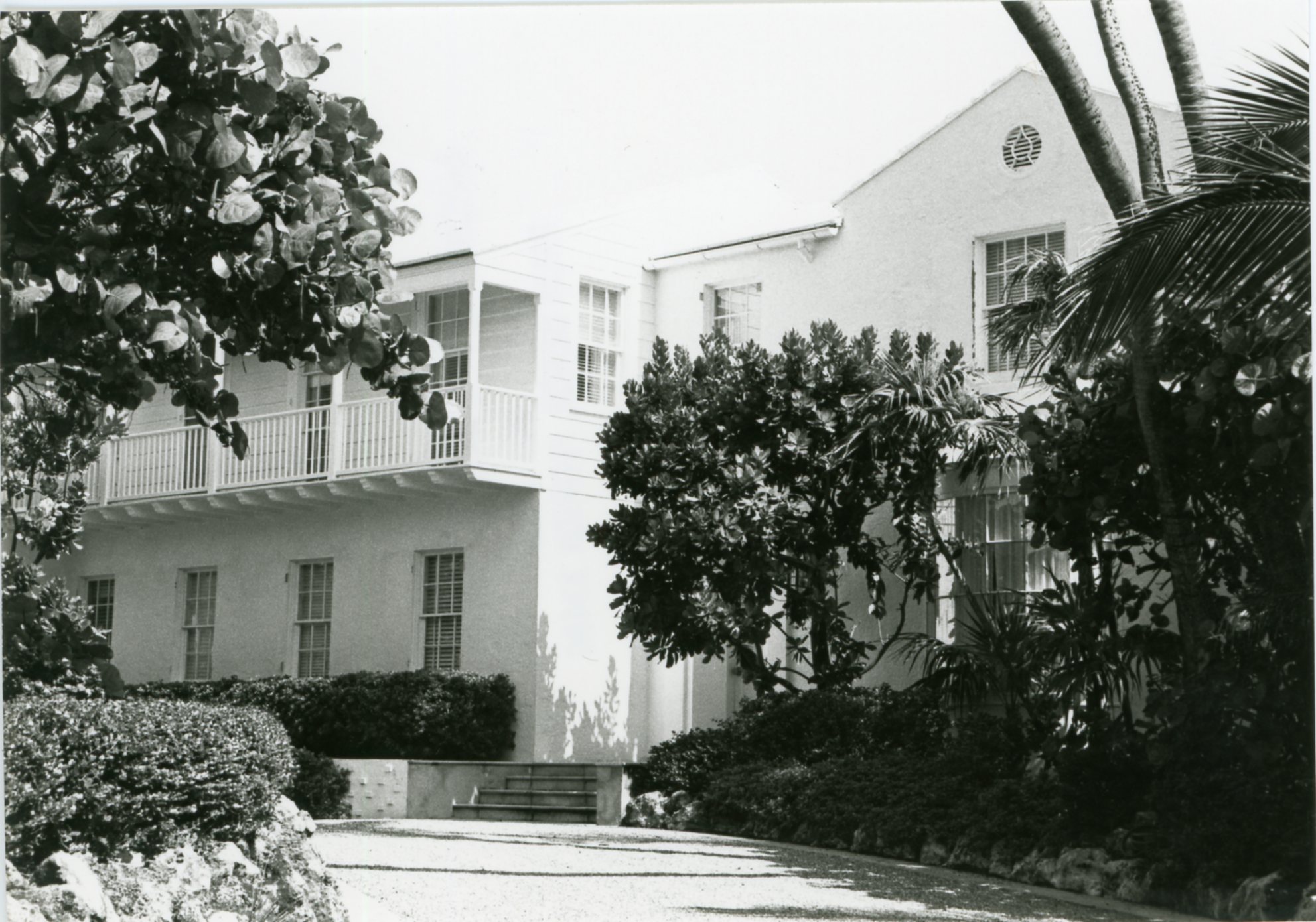
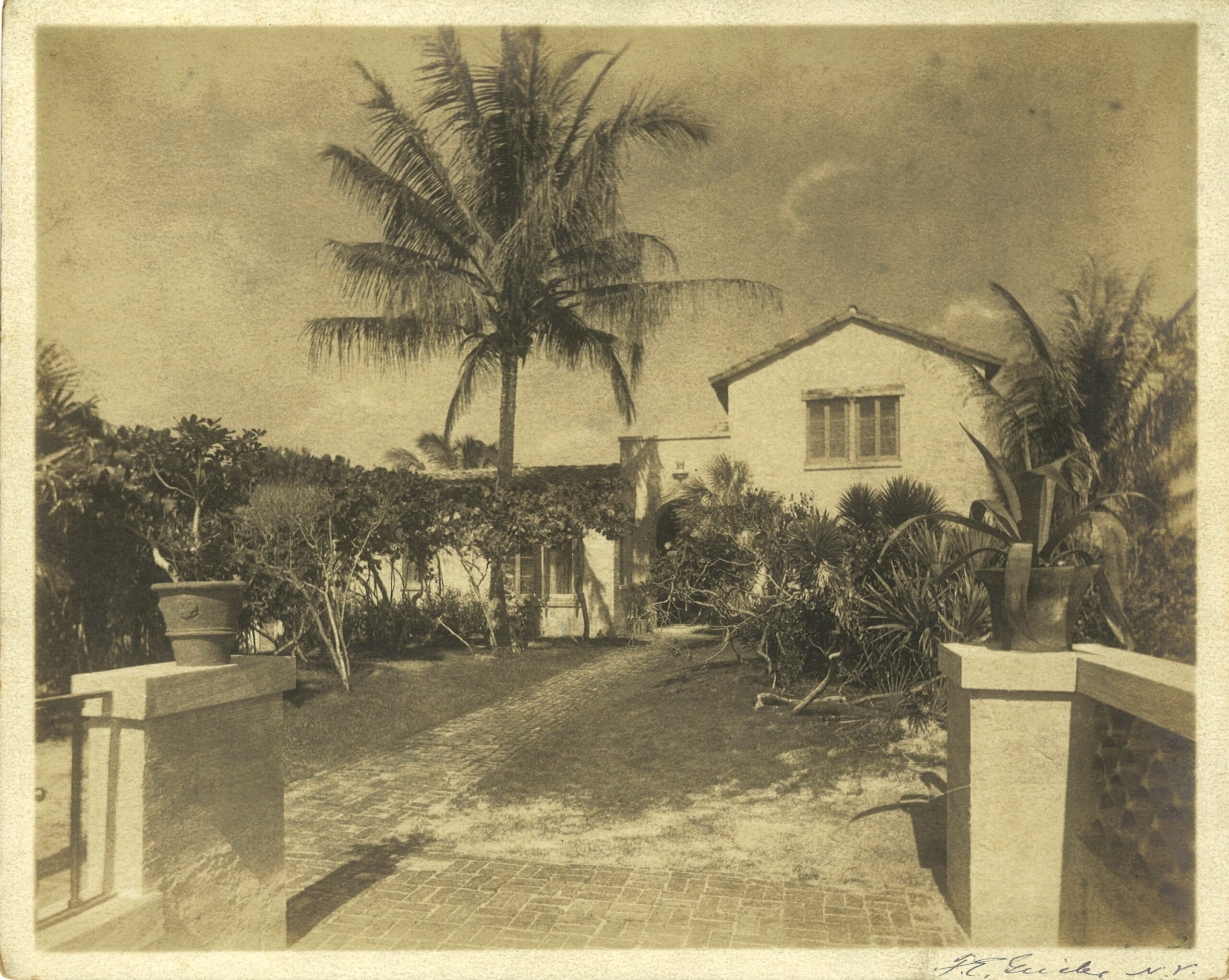
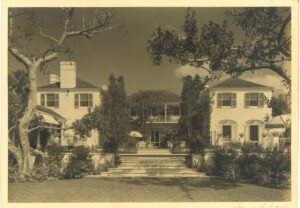
The shift was seen not only in new construction, but in renovations of pre-existing estates. The Ocean Boulevard residence of Mr. and Mrs. Clifford Vail Brokaw, a grand Mediterranean Revival estate designed by Marion Sims Wyeth in 1924, was transformed by builder Charles Trevail over the summer of 1936 into a style then considered to be “Tropical Colonial,” which featured a 2-story east facing veranda, cement tile roof, white color, and minimal ornamentation. The change was so stunning that it received a highlight in the Palm Beach Post-Times, signaling this architectural trend had taken hold in Palm Beach society.
The Architects' Small House Bureau
The Architects’ Small House Bureau
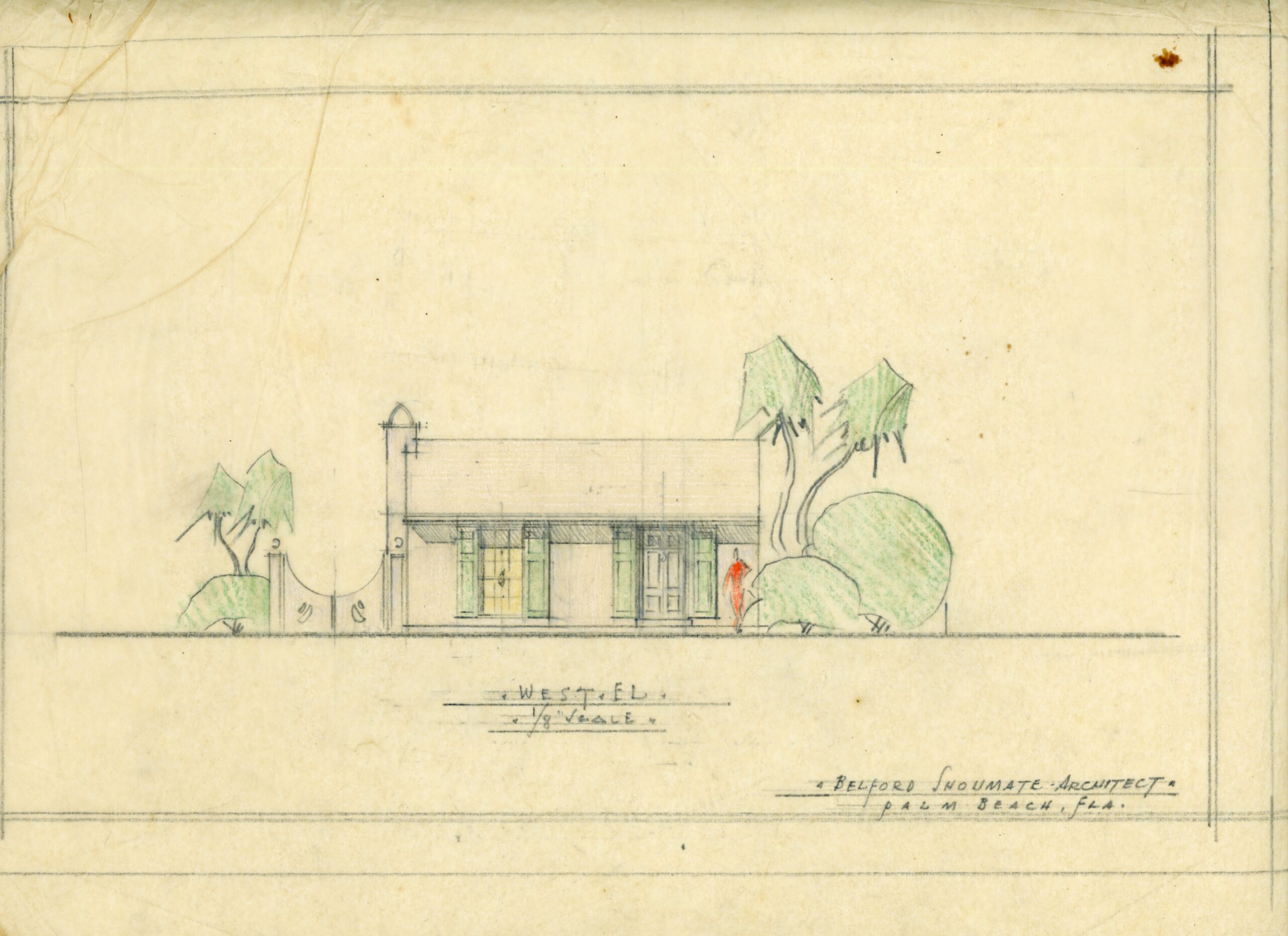
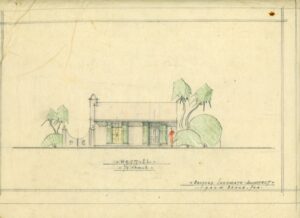
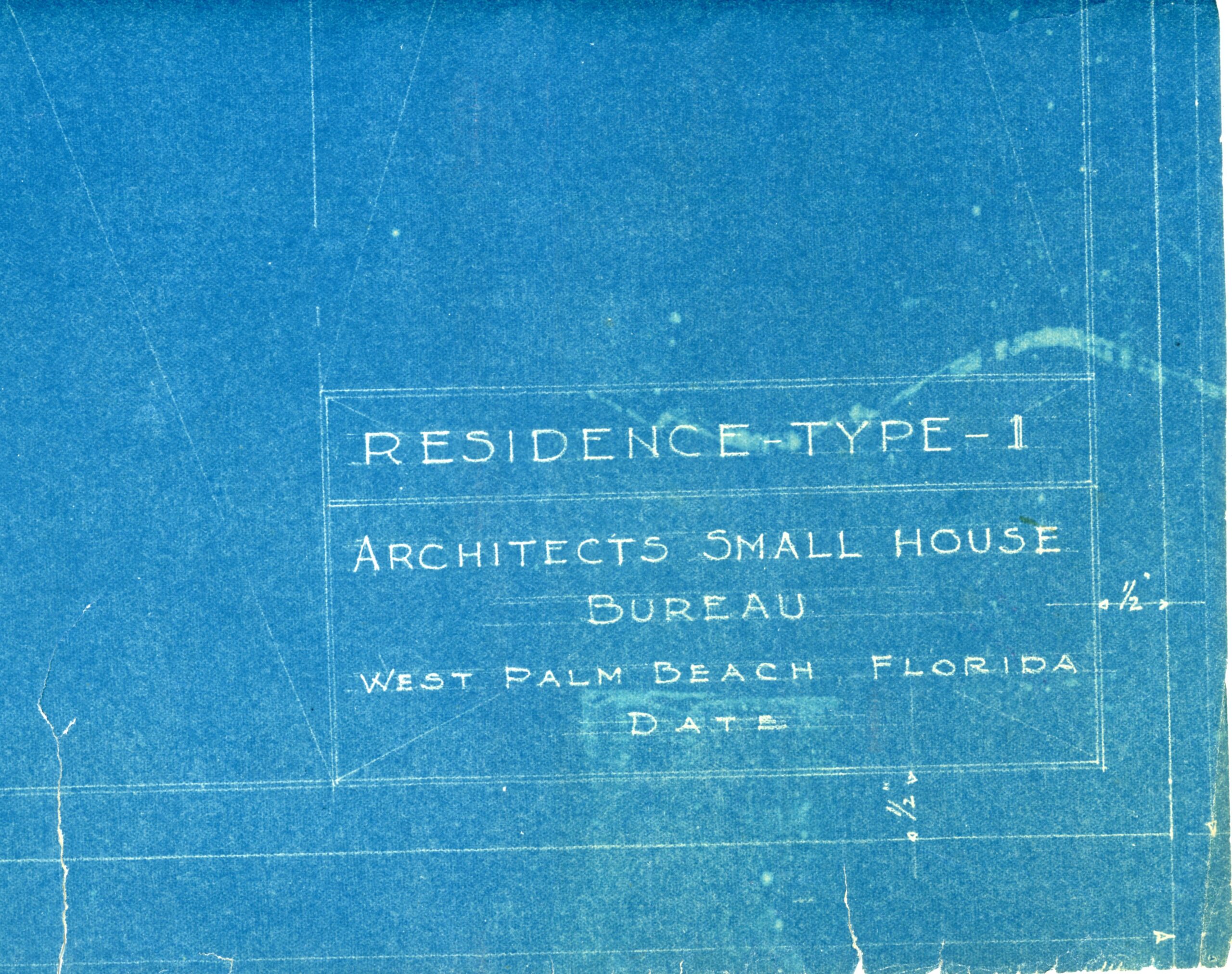
Following national trends, in 1945, a Palm Beach Chapter of the Architects’ Small House Bureau formed. Their goal was to provide professionally designed plans for small, affordable houses in West Palm Beach, where homes costing under $5,000 ($90,223 today) did not require architectural supervision. Leading architects—including John L. Volk, Marion Sims Wyeth, Belford Shoumate, Gustav Maass, and Henry Harding—pooled their expertise to create ready-made plans sold to builders for $100 ($1,805) per set. The aim was simple: to improve the design quality of small houses, reduce building costs, and speed construction at a time when demand for modest residences was rising.
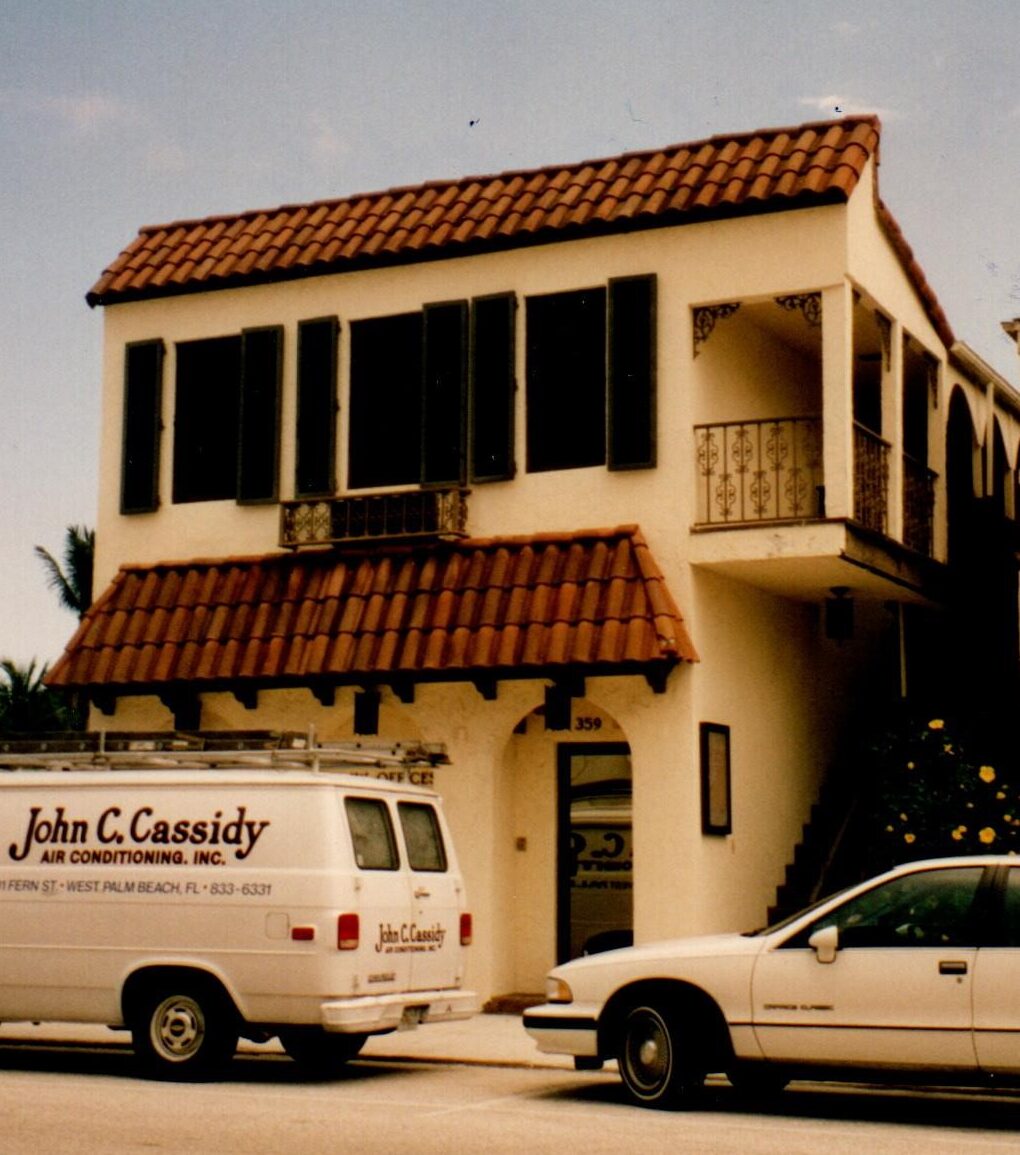
The announcement brought immediate and overwhelming interest—over 100 people asked to view the plans in the first week. But none had been prepared, and momentum stalled. By 1946, only five plans were produced, two sold, and none were built. The completed drawings were displayed at the Bureau’s headquarters at 359 South County Road, directly across from Town Hall.
The announcement brought immediate and overwhelming interest—over 100 people asked to view the plans in the first week. But none had been prepared, and momentum stalled. By 1946, only five plans were produced, two sold, and none were built. The completed drawings were displayed at the Bureau’s headquarters at 359 South County Road, directly across from Town Hall.
The Housing Finance Corporation
The Housing Finance Corporation
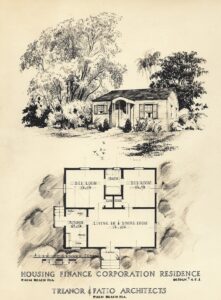
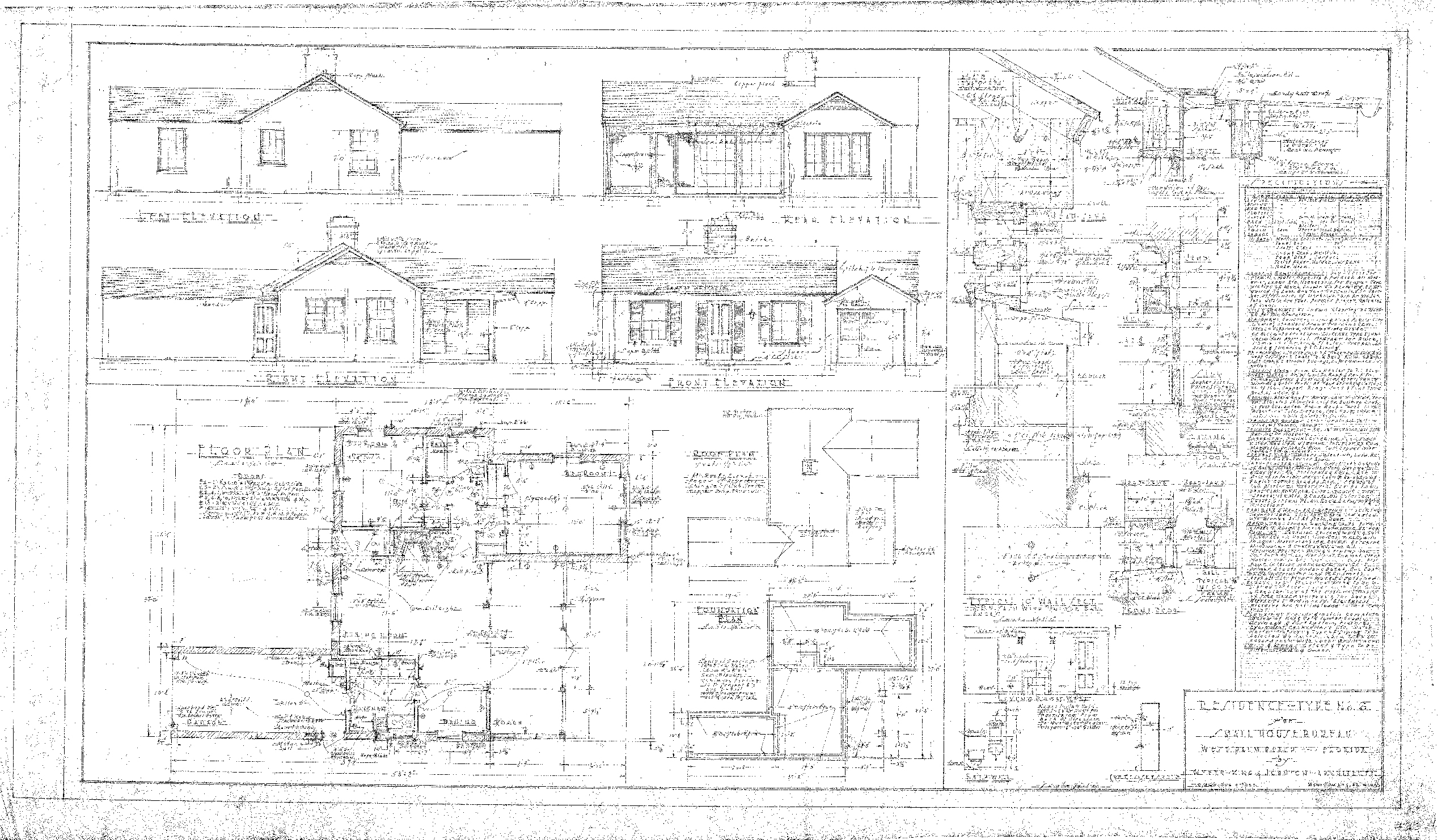
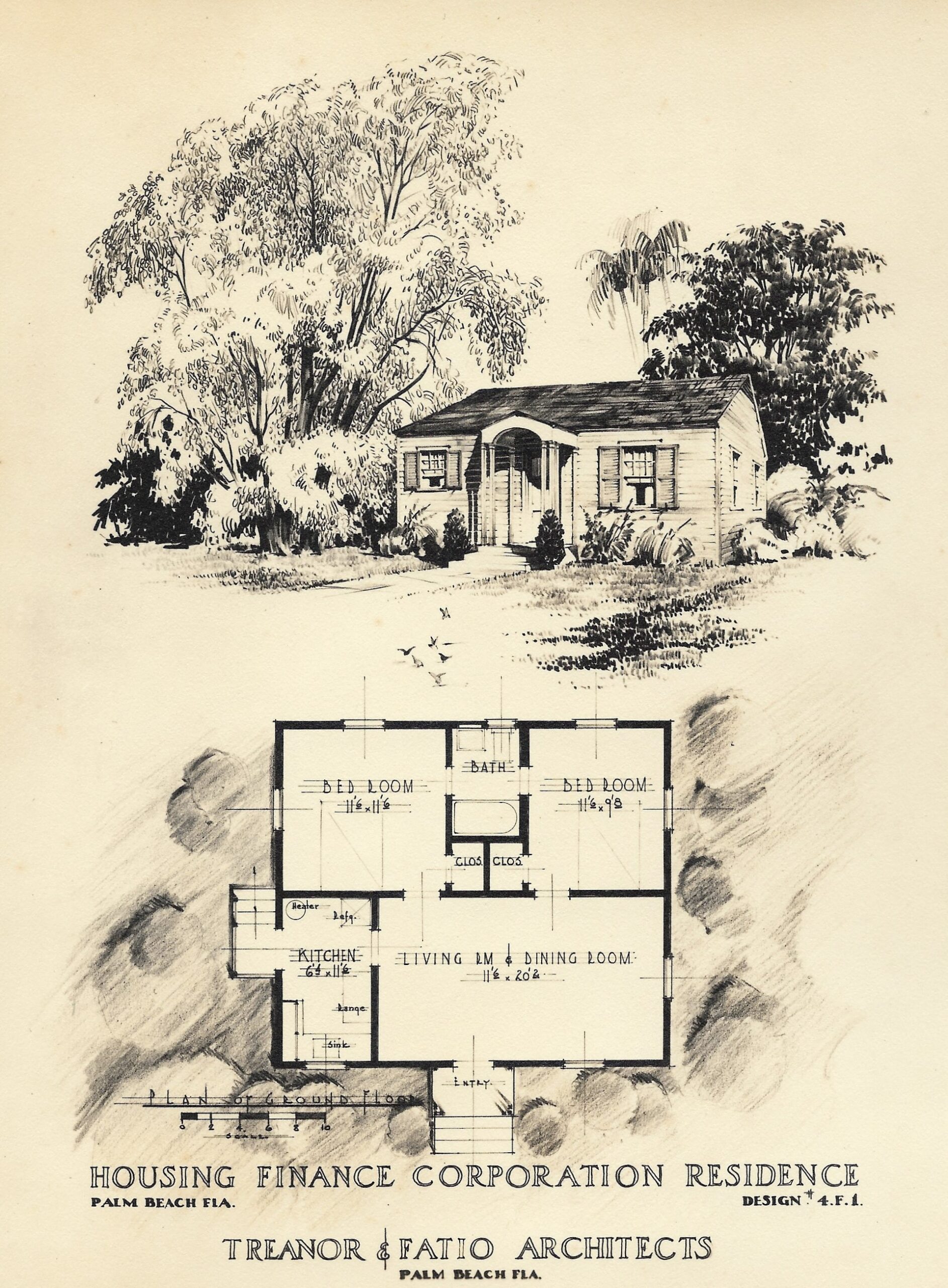
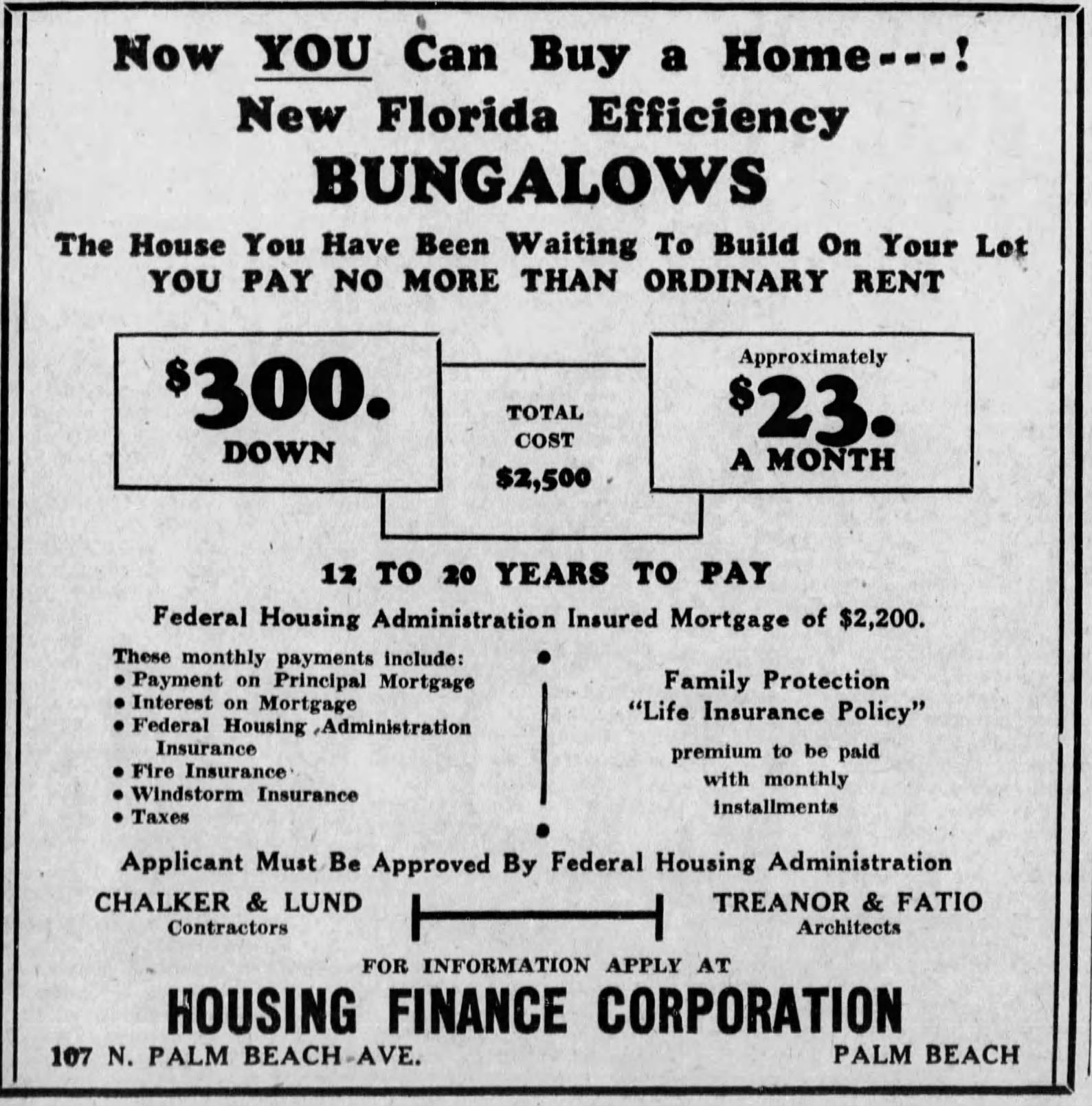
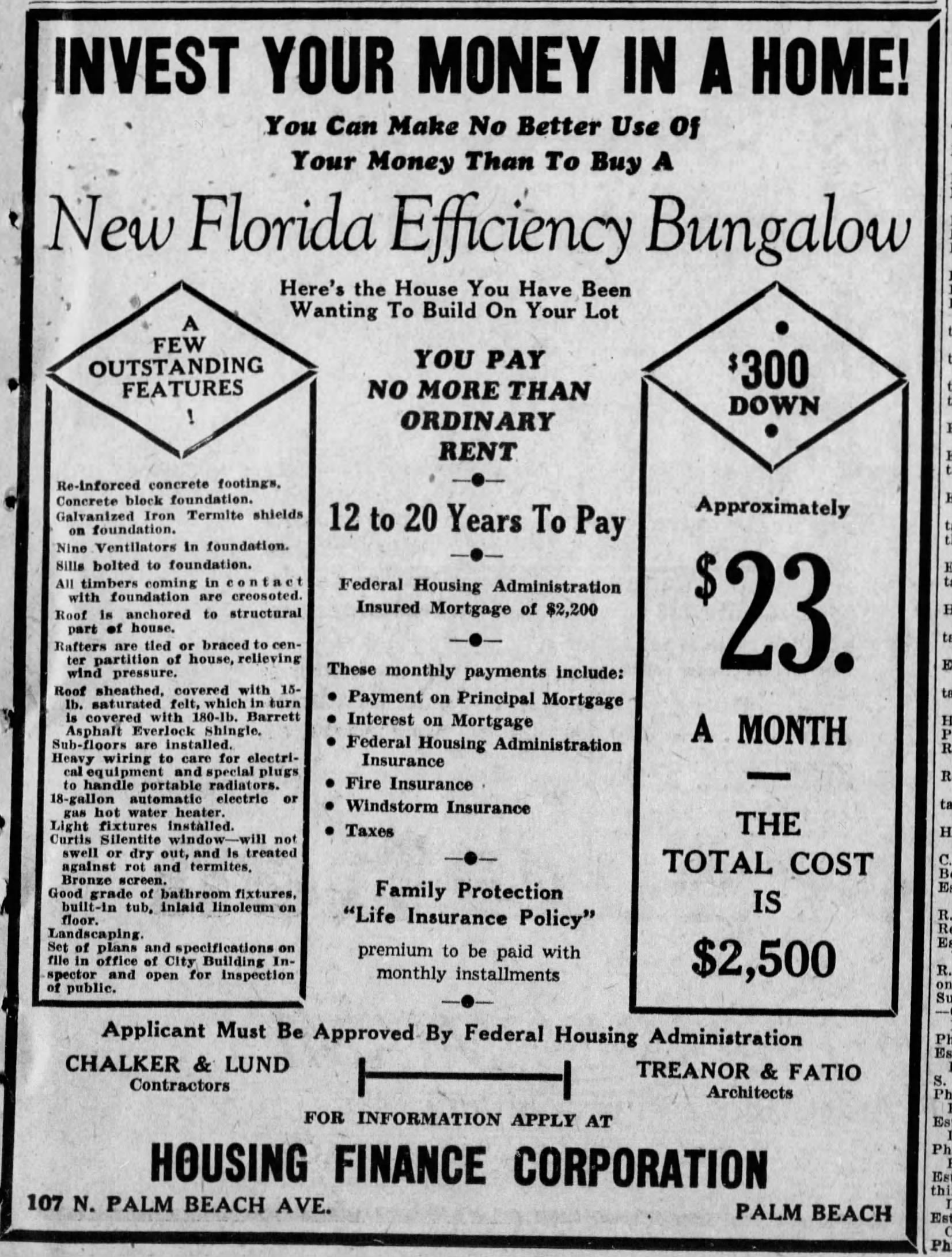
Equally short-lived was the 1936 Housing Finance Corporation, marketed as a mass-production home project partially funded by the New Deal-created Federal Housing Administration. The plan involved constructing 1,000 houses in communities between West Palm Beach and Hollywood, FL. Designed by Palm Beach architectural firm Treanor & Fatio and built by Chalker & Lund contractors, this universal four-room “Efficiency Bungalow” would contain two bedrooms, a bathroom, a kitchen, and a combination dining room/living room. A solution to a growing population of landowners without the funds to build a home, through the Federal Housing Administration’s mortgage plan and support from an anonymous financier, prospective homeowners could construct an efficiency bungalow for $2,500 ($58,417), broken into one $300 ($7,010) down payment and monthly $23 ($537) payments.
The Housing Finance Corporation’s production of homes in the Palm Beaches was meant to serve as a pilot program for a larger national roll-out of the project, but there is no evidence that any homes were built using the system.
Refined Design: Quiet, Subdued, & Rational
REfined Design: Quiet, Subdued, & Rational
While projects attempting small-house construction and ownership with national success were not met with the same enthusiasm in Palm Beach, architectural trends toward simplistic, classic styles left a lasting impact. The lack of influence of the Great Depression on Palm Beach can be seen in the types of residences built in the years following, with construction beginning to increase in 1934. While residents did not want to outwardly display their wealth in grand design, the construction costs of estates still reached levels over $150,000 ($3.6 million today). These new homes incorporated elements of emerging styles in Palm Beach, including the 2nd story cantilevered balcony of Monterey and the minimal design of Georgian Revival, while still keeping an eye towards the Palm Beach architecture of the past.
Lanfranchi Residence
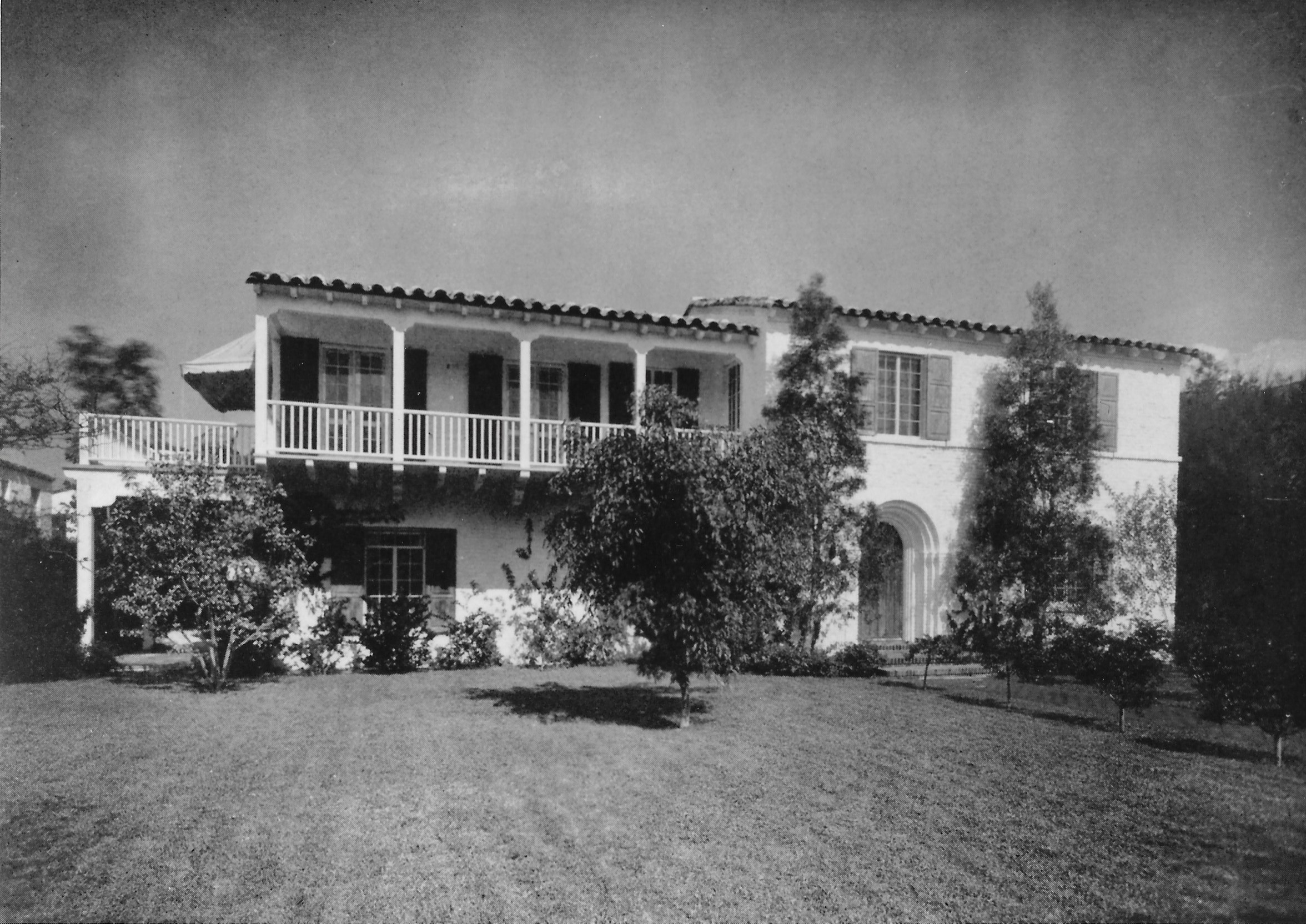
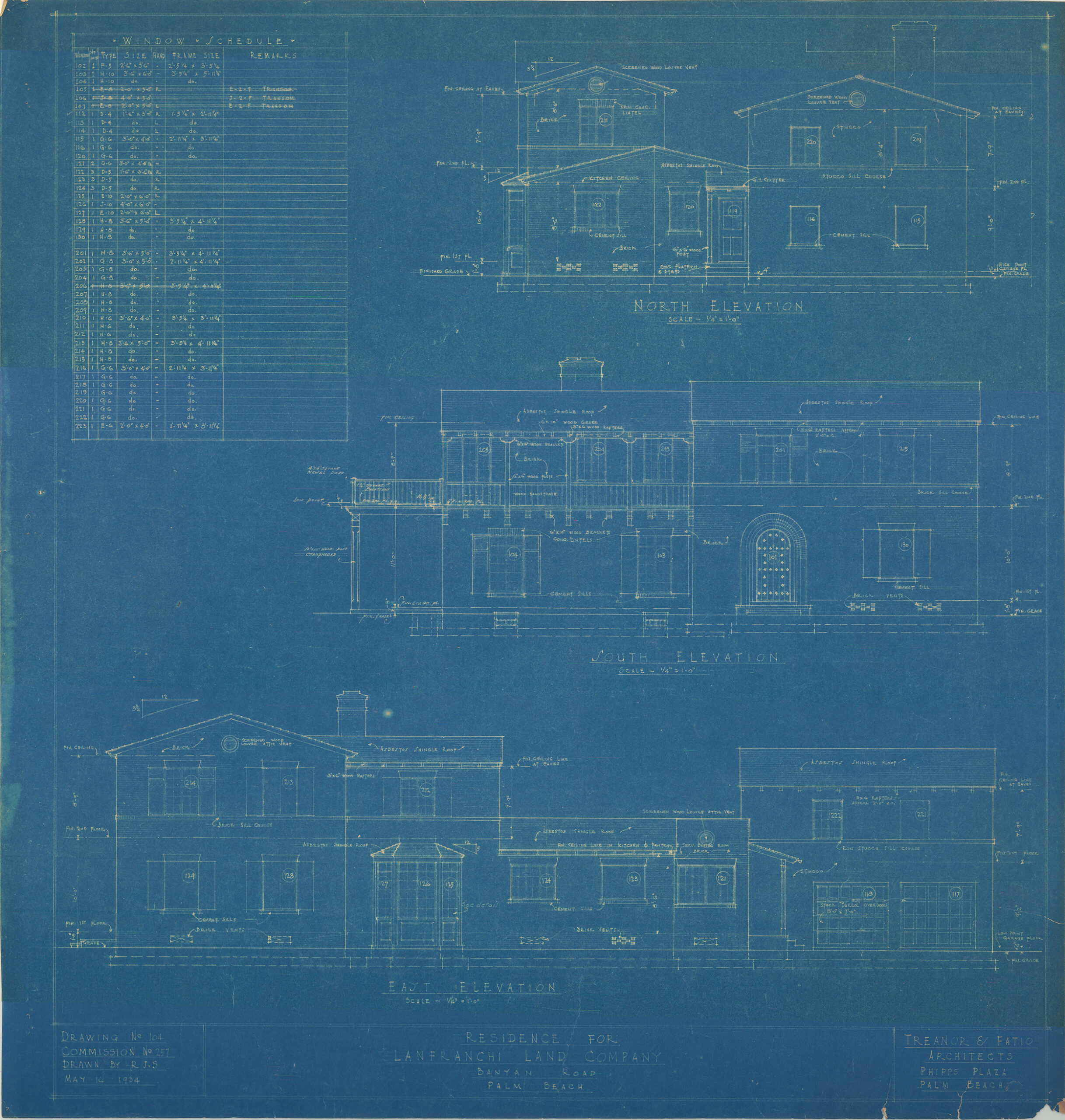
Designed by Maurice Fatio of the firm Treanor & Fatio, a residence for Eugene P. Lanfranchi, founder of the Lanfranchi Wrought Iron Factories, was announced for construction in 1934. Described in newspapers as Monterey style, the home has a distinctive Mediterranean Revival-influence, with a barrel tile roof, wood detailing and doors, and an elaborate stone carved entryway.
Southwood
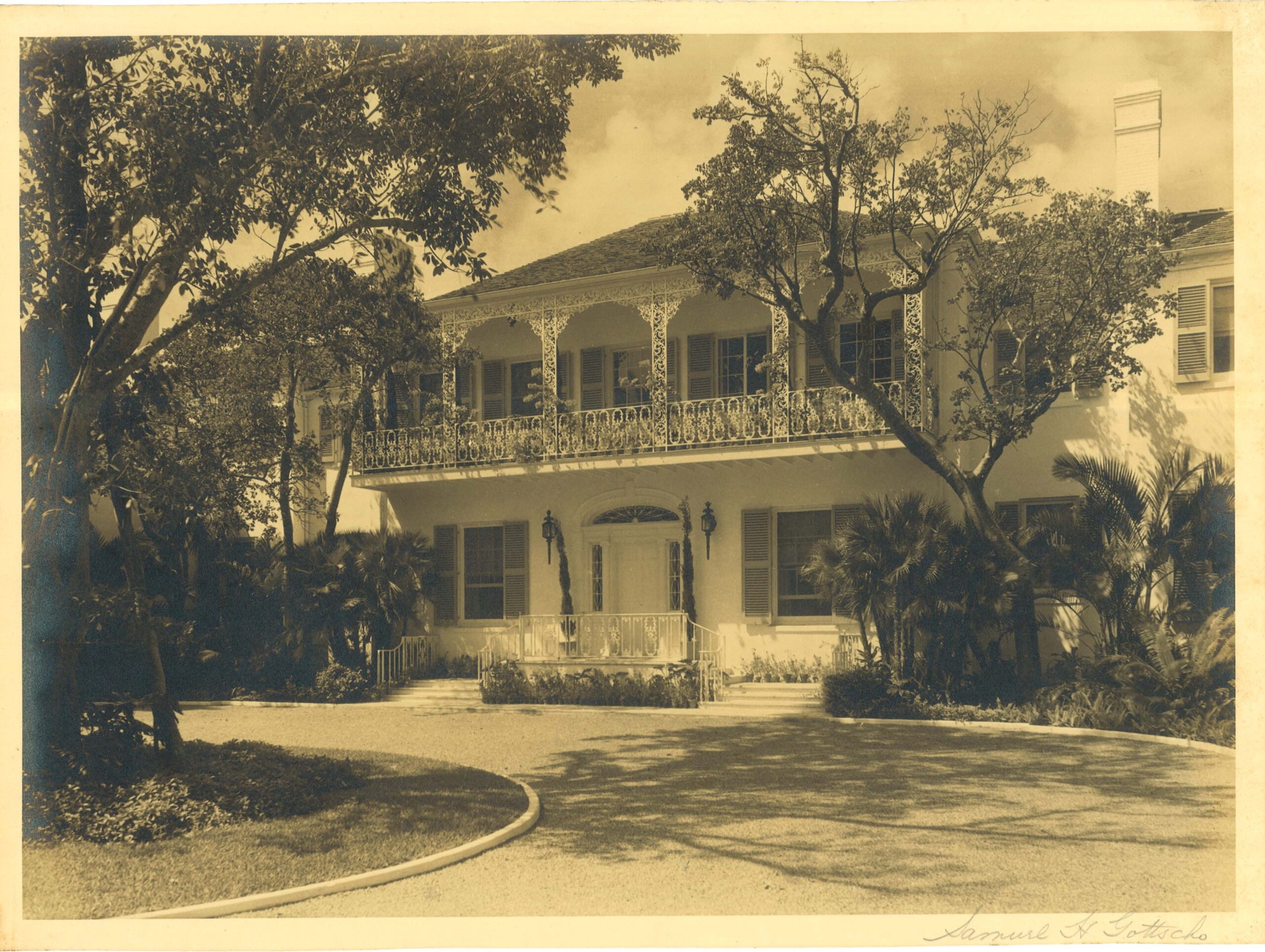
Southwood, designed by Marion Sims Wyeth of Wyeth & King for Dr. John A. Vietor and his wife Eleanor Woodward Vietor, a Jell-O heiress, was classified both as Monterey and Colonial Revival “with a decidedly New Orleans feeling,” referencing the focus on balconies and wrought iron details. Perhaps a reflection of the decrease in commissioned estates caused by the Depression, Wyeth drafted over 150 drawings for Southwood, significantly more than the usual amount for an architect of the time.
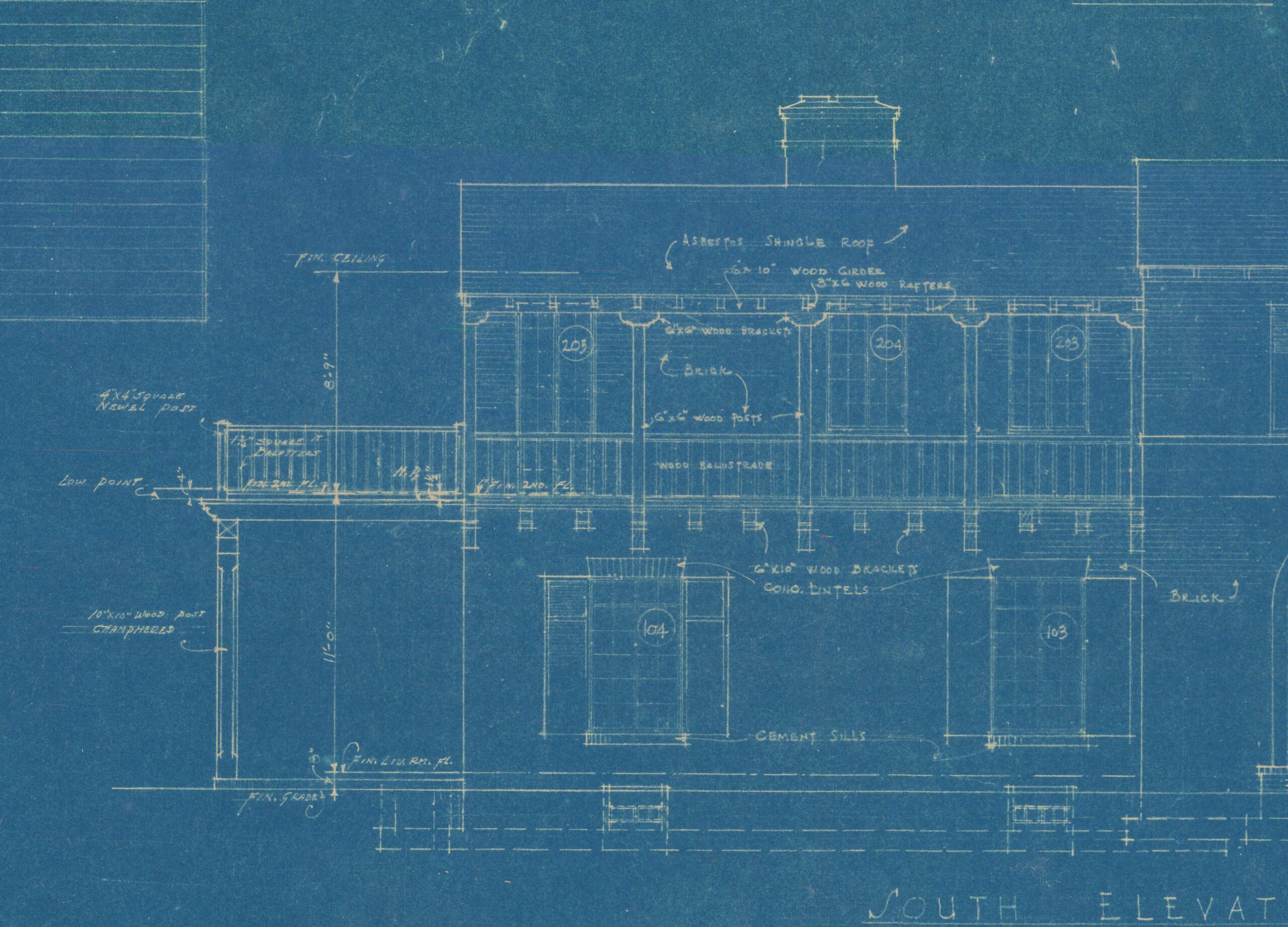
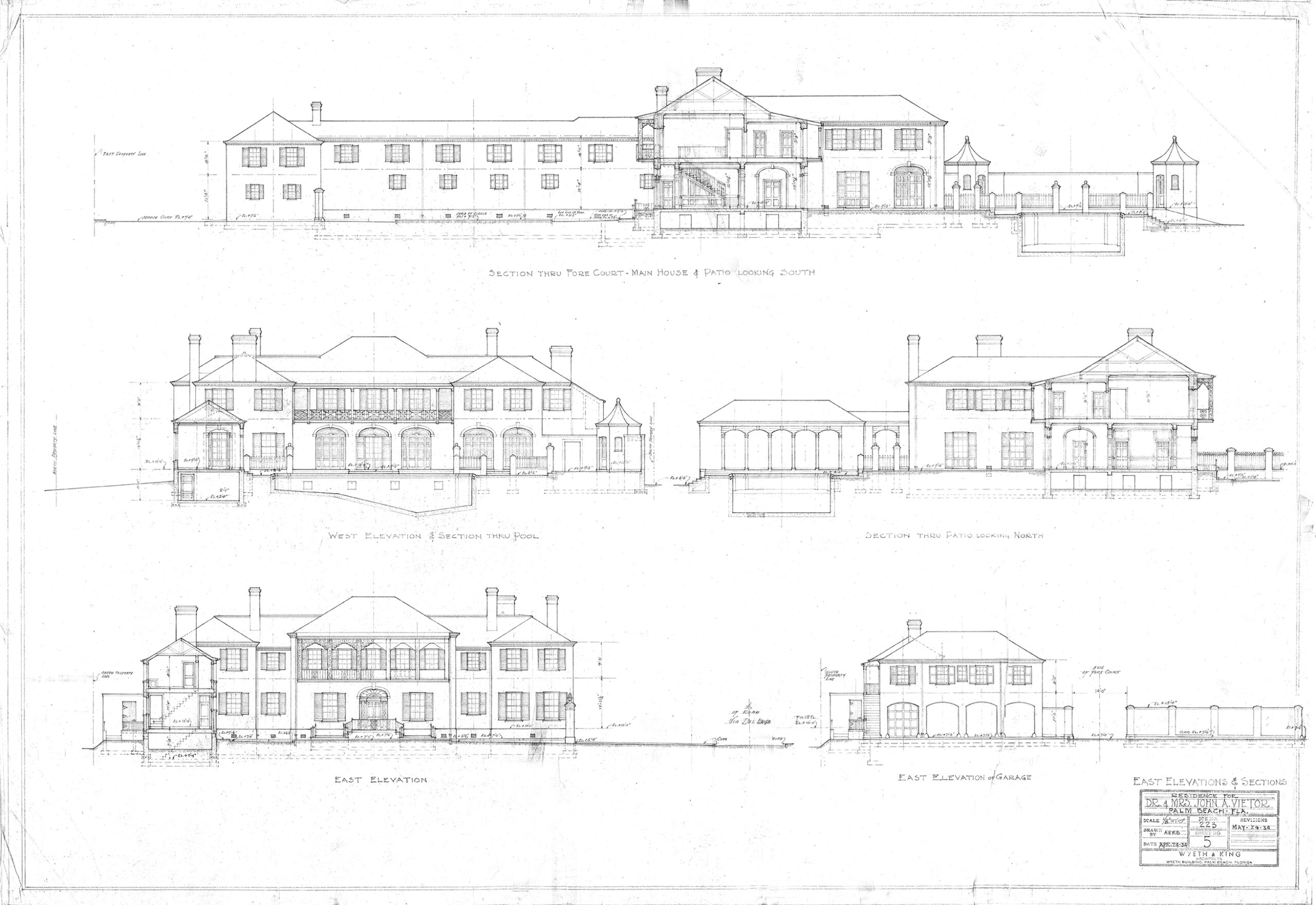
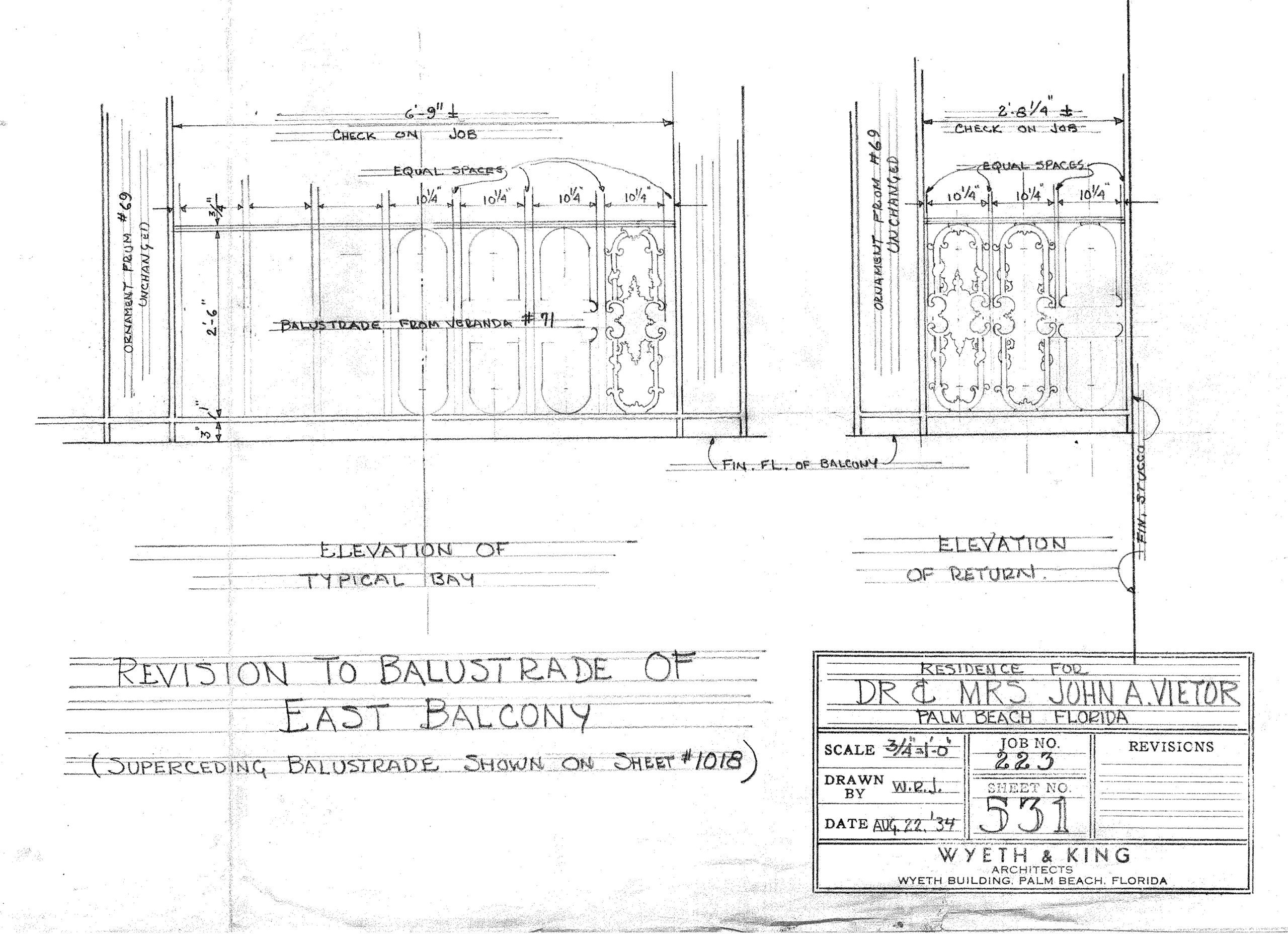
For though a few spasmodic instances of the Colonial motif had been noted over a period of several years, it was not until the summer of 1934 that the definite trend away from the Spanish became an accepted fact. As construction has steadily mounted in 1934, 1935, and 1936, the white of the Colonial and the classic has replaced the pastels of the Spanish; simplicity of line and design has succeeded the elaborate. In brief, Palm Beach houses are becoming homes rather than show palaces. The current cycle of architectural fashion has replaced the Spanish, just as after 1918, Addison Mizner’s palatial designs took the place of the early, bleak and barn-like structures of the pioneer era. The million dollar Palm Beach palace is as obsolete as the Gibson Girl.
Palm Beach Modern Homes
Palm Beach Modern Homes
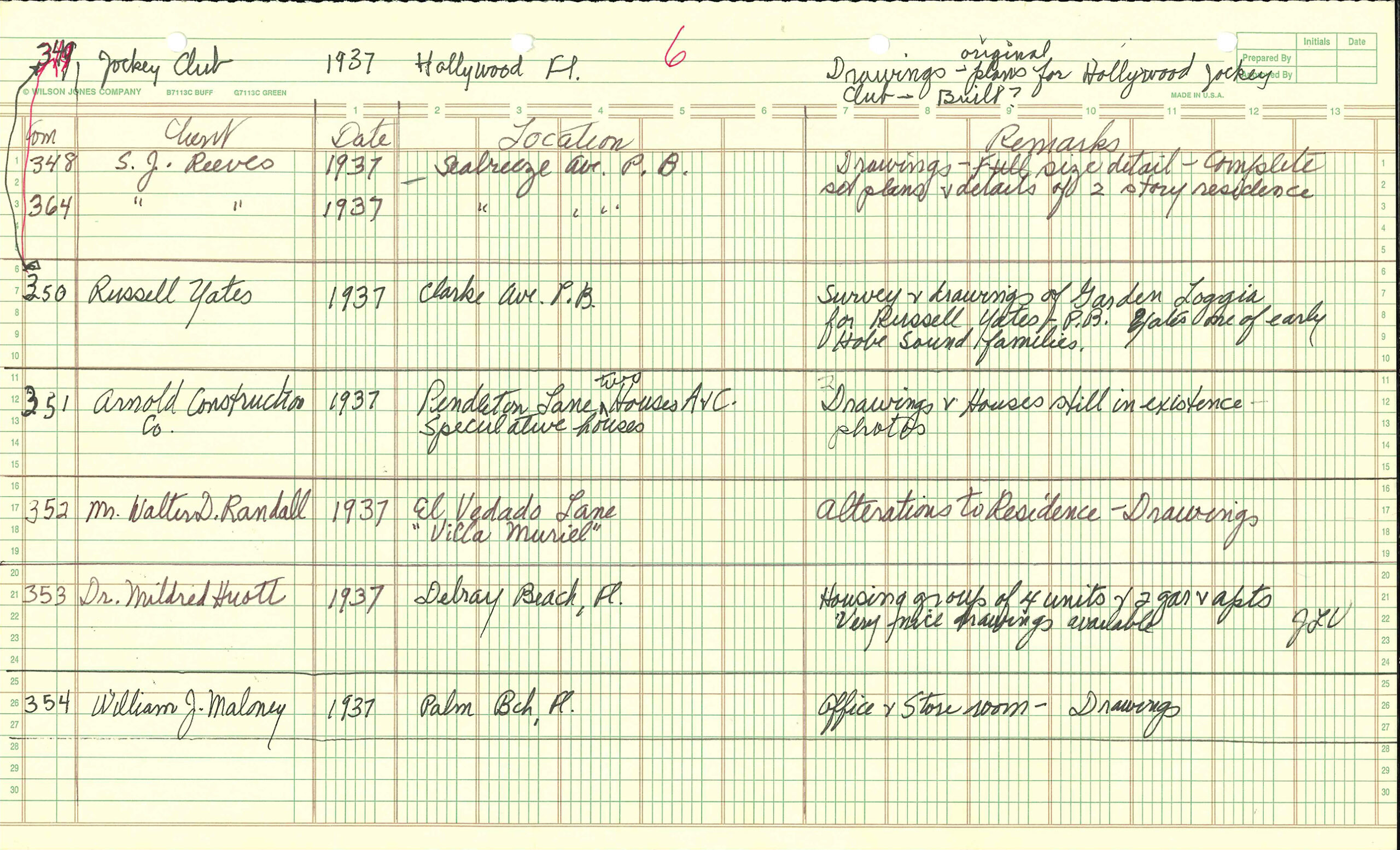
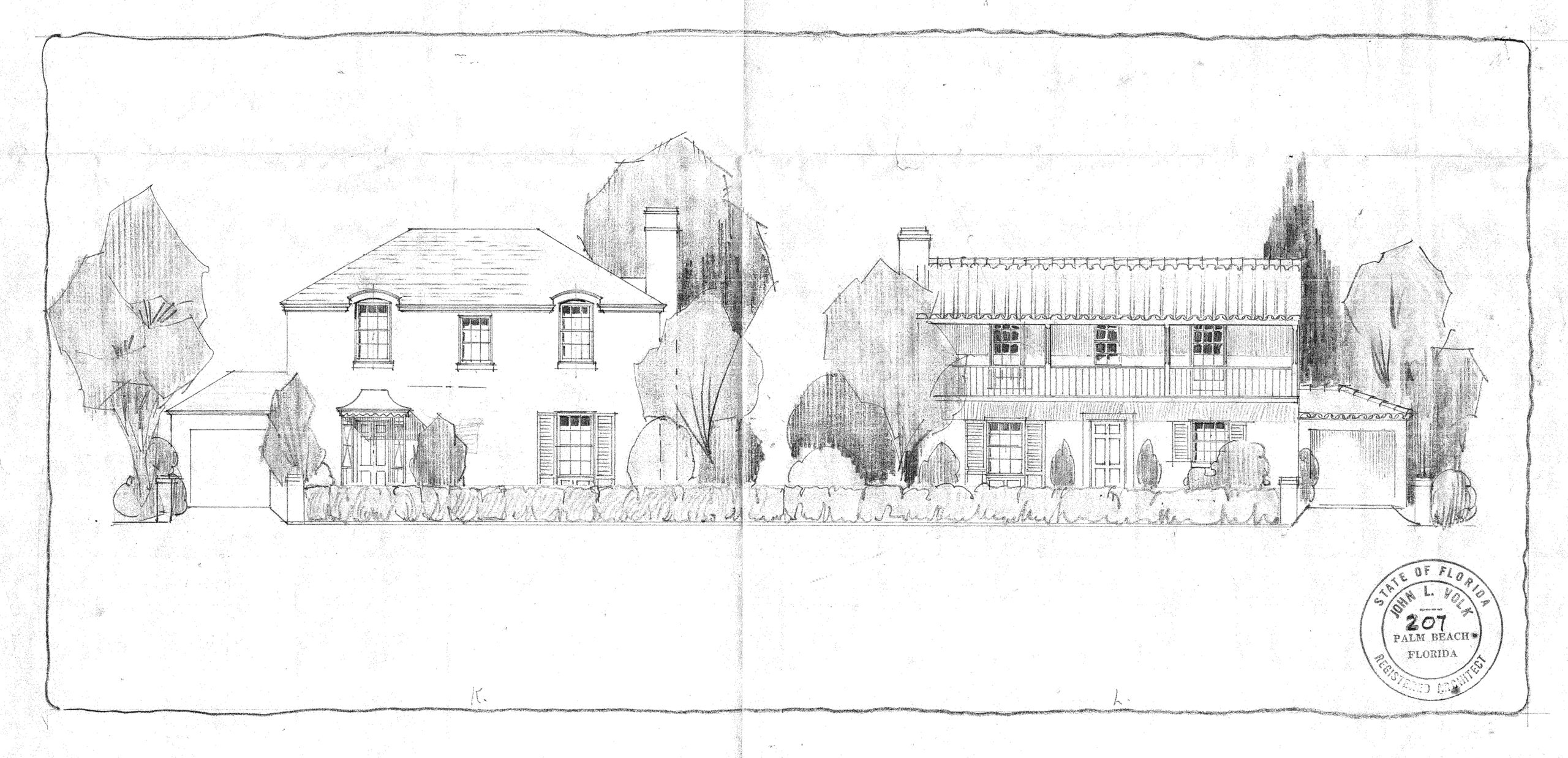
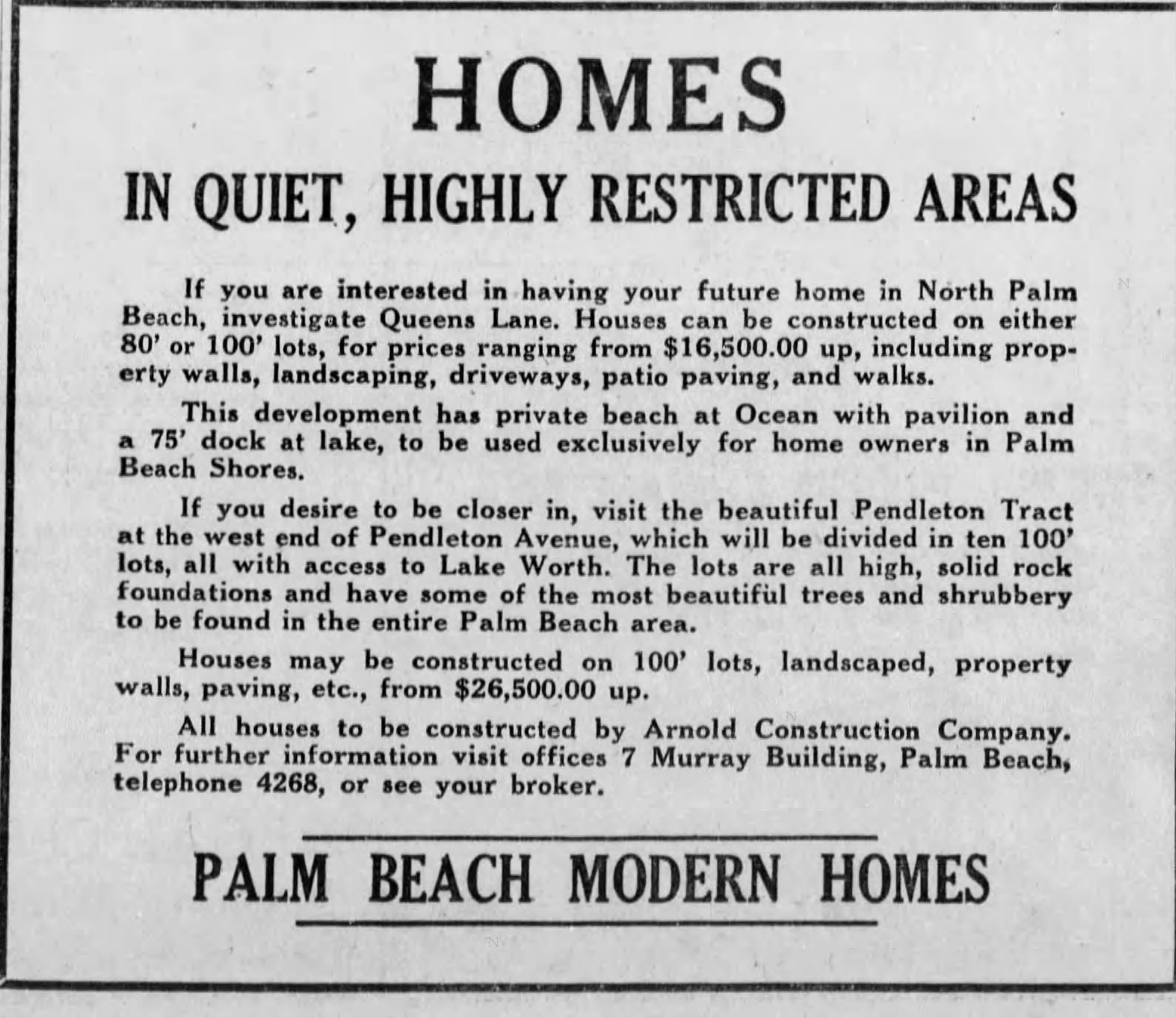
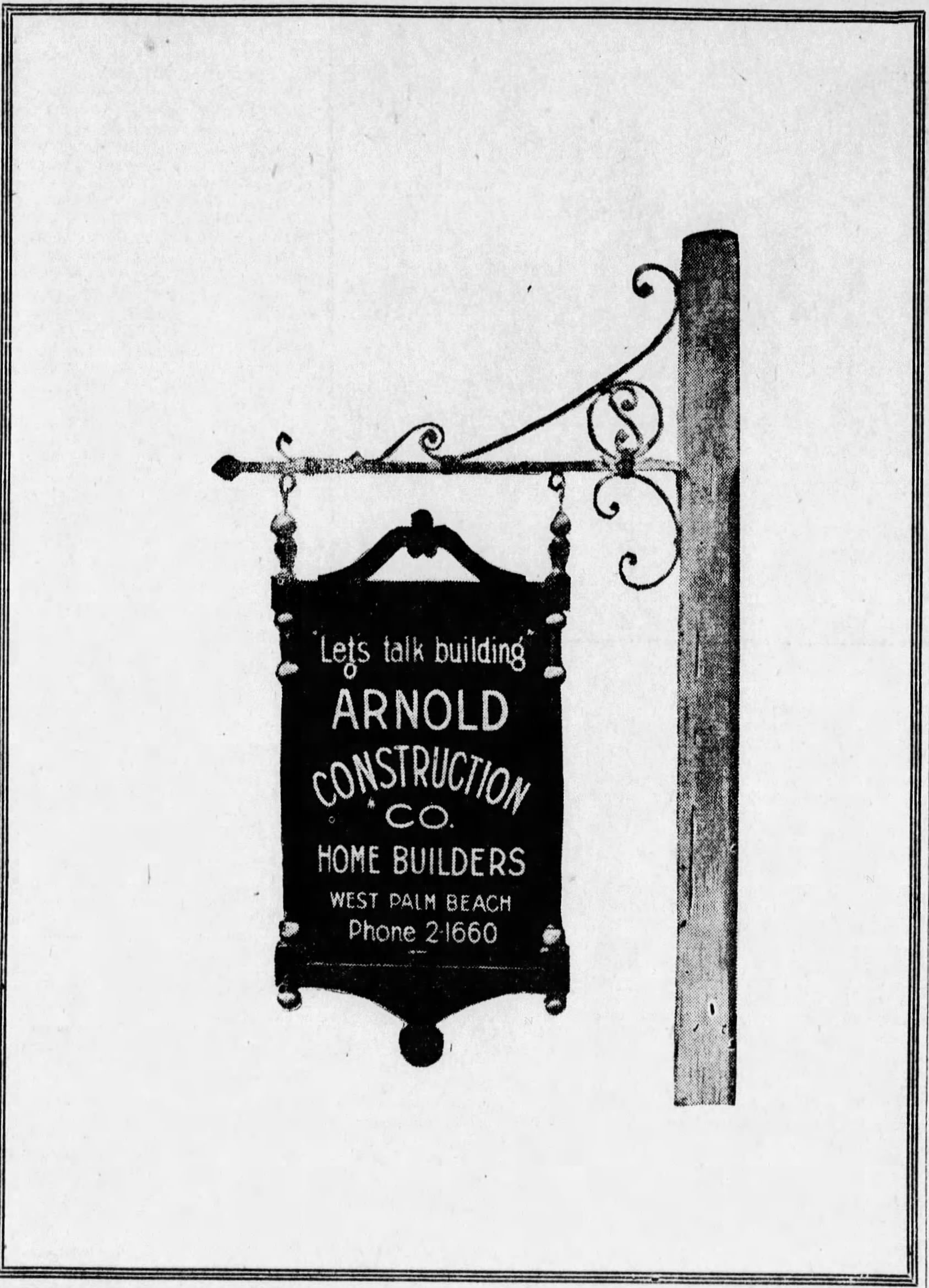
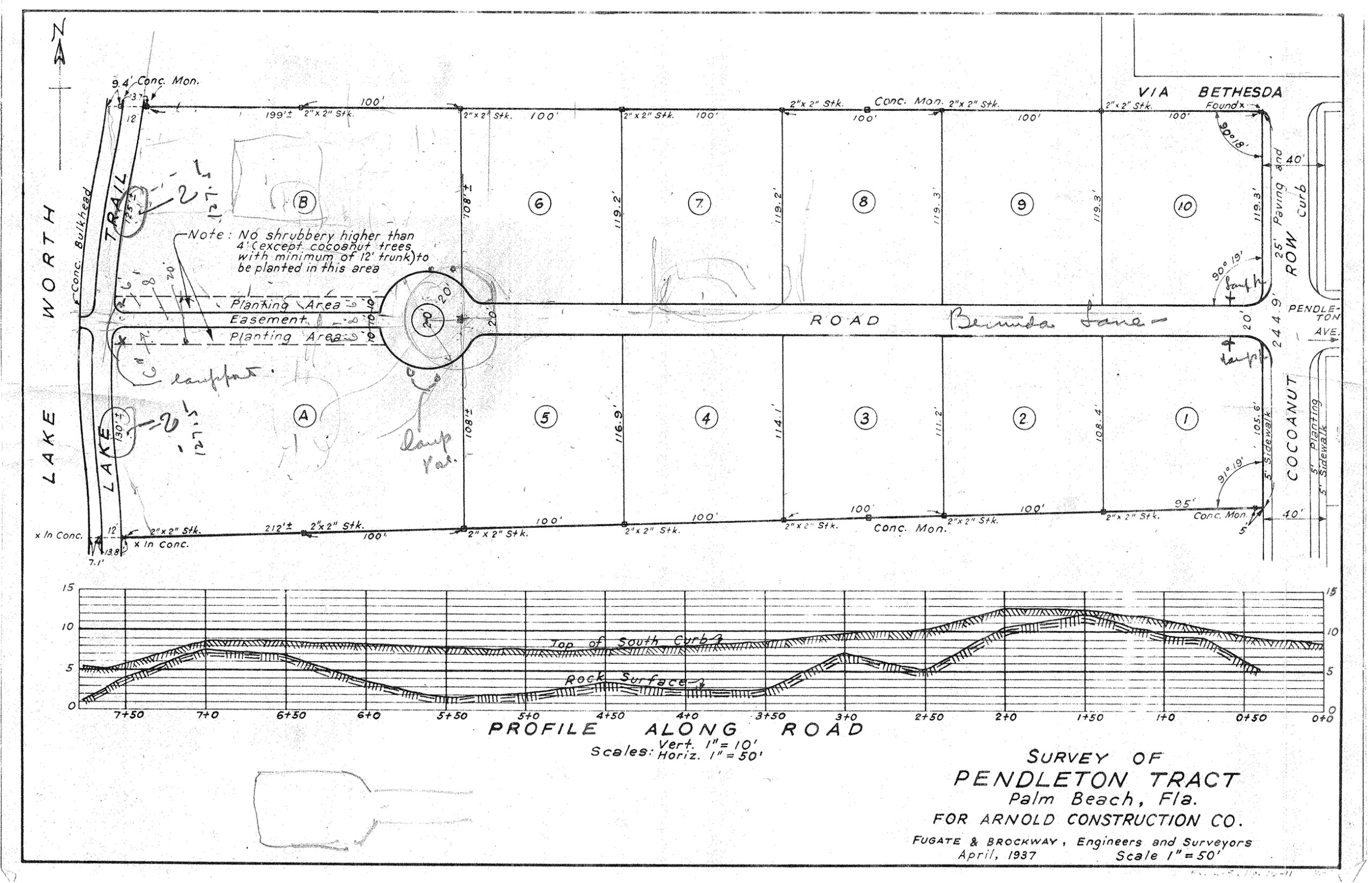
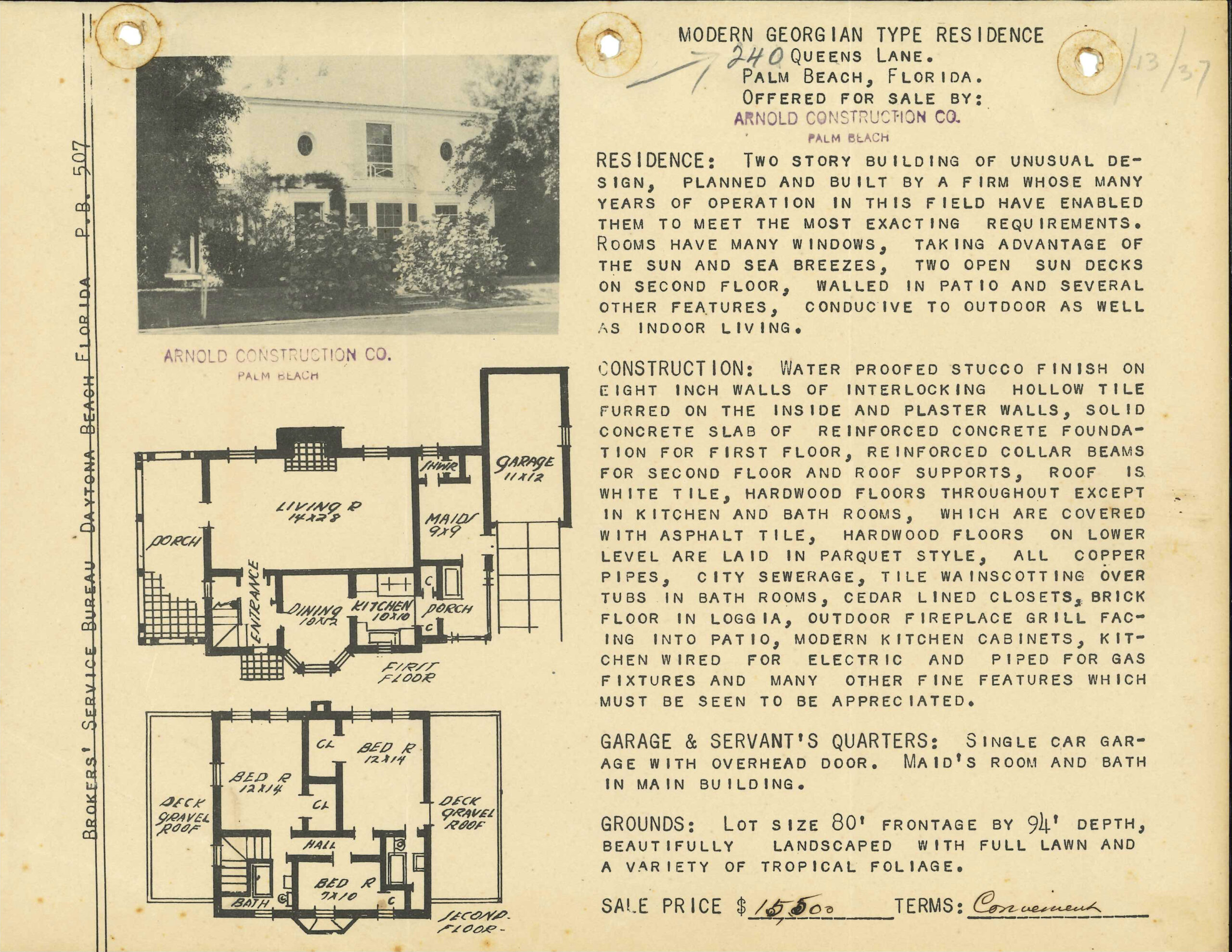
Arnold Construction Company was established in Palm Beach in 1925 by brothers James Y. Arnold and William H. Arnold, and worked in partnership with Palm Beach Modern Homes, Inc., a land development corporation also headed by the Arnolds. During the 1930s, Palm Beach Modern Homes, Inc. developed two major subdivisions: Pendleton Tract and Palm Beach Shores. Working as parts of a whole, Palm Beach Modern homes would sell lots, commission prominent local architects for designs, and contract Arnold Construction Co. as builders.
Many of the houses in these subdivisions were built on speculation, a major departure from early Palm Beach construction. Marketing emphasized Palm Beach ideals of well-designed architecture and exclusive entry, as well as amenities, including a private dock and beachfront, for residents. Architects gravitated towards Georgian Revival, Bermudian, and Monterey styles in designing these speculative homes, creating unified street views with a new interpretation of Palm Beach style.
Pendleton Avenue & Pendleton Lane
Pendleton Avenue & Pendleton Lane
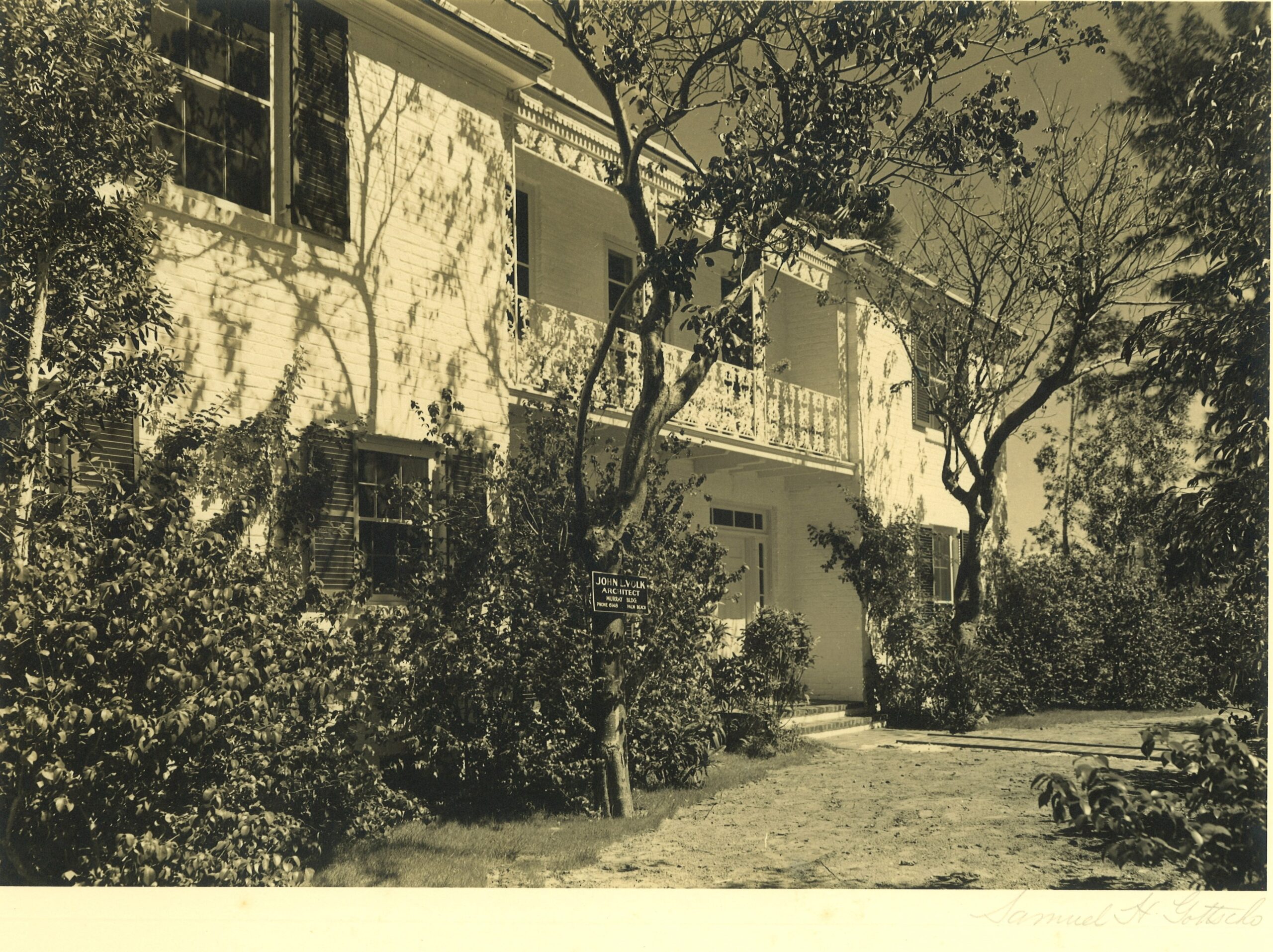
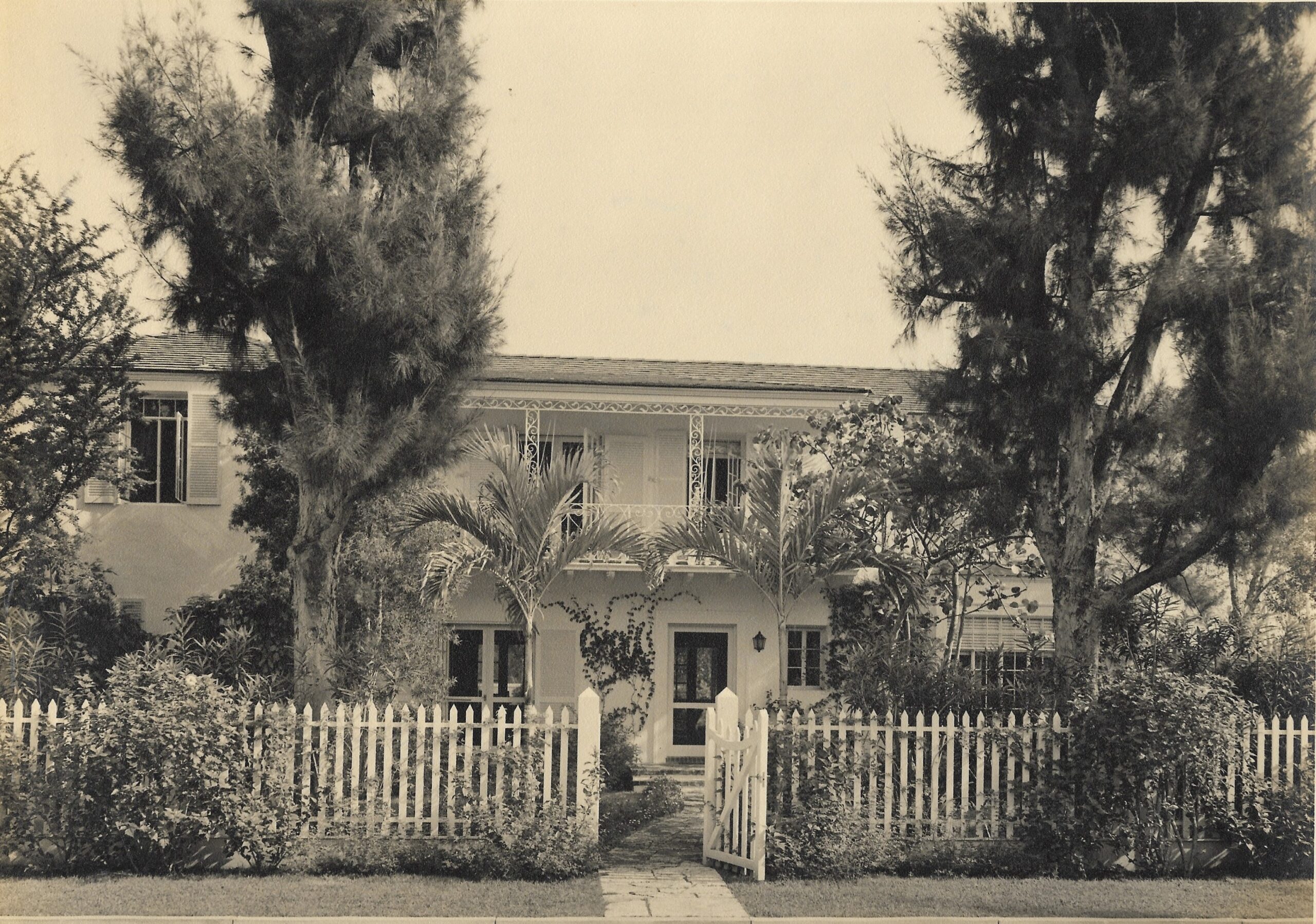
Pendleton Avenue was named after Edward Gray Pendleton, a pioneer and Civil War Union Major, whose home, Reverie, sat on the Lake Trail. Following his death in 1920, the land became the Pendleton Tract, with the final portion being plotted by Arnold Construction Co. in 1937. Homes along Pendleton were built mainly between 1934-1940, with principal architects including John L. Volk, Gustav Maass, Treanor & Fatio, Wyeth & King, and Howard Chilton. Pendleton Lane was developed by Palm Beach Modern Homes, Inc., with all houses designed by John L. Volk and built by Arnold Construction Co. between 1937-1940.
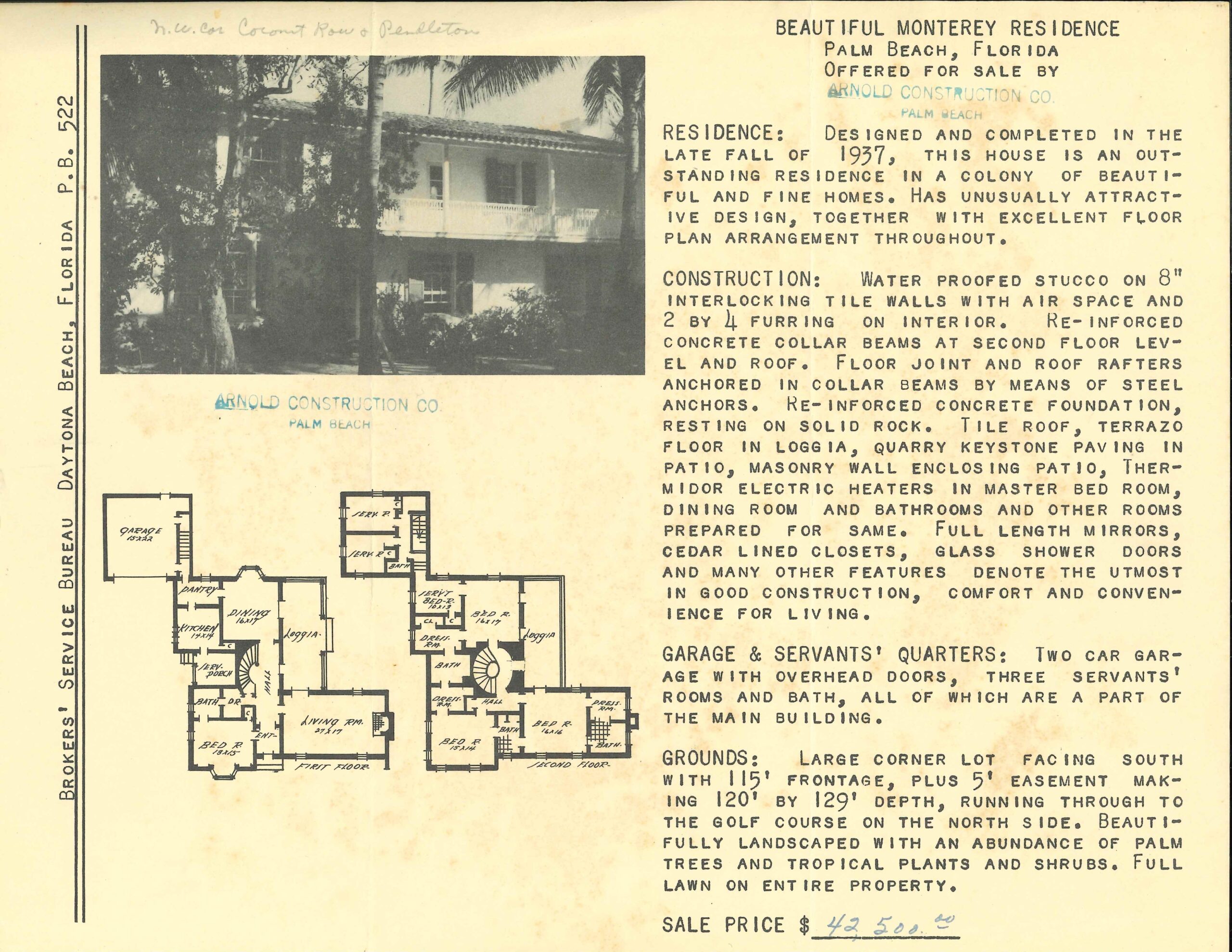
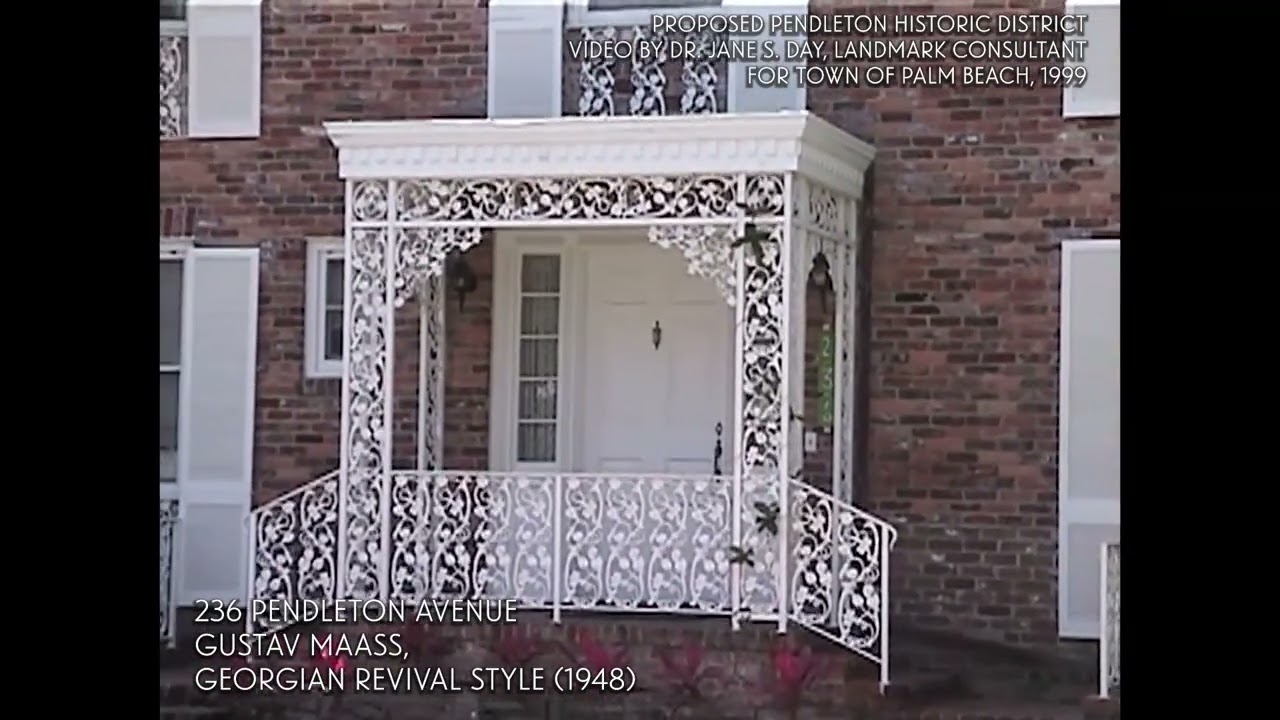
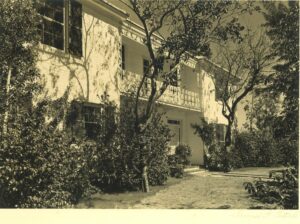
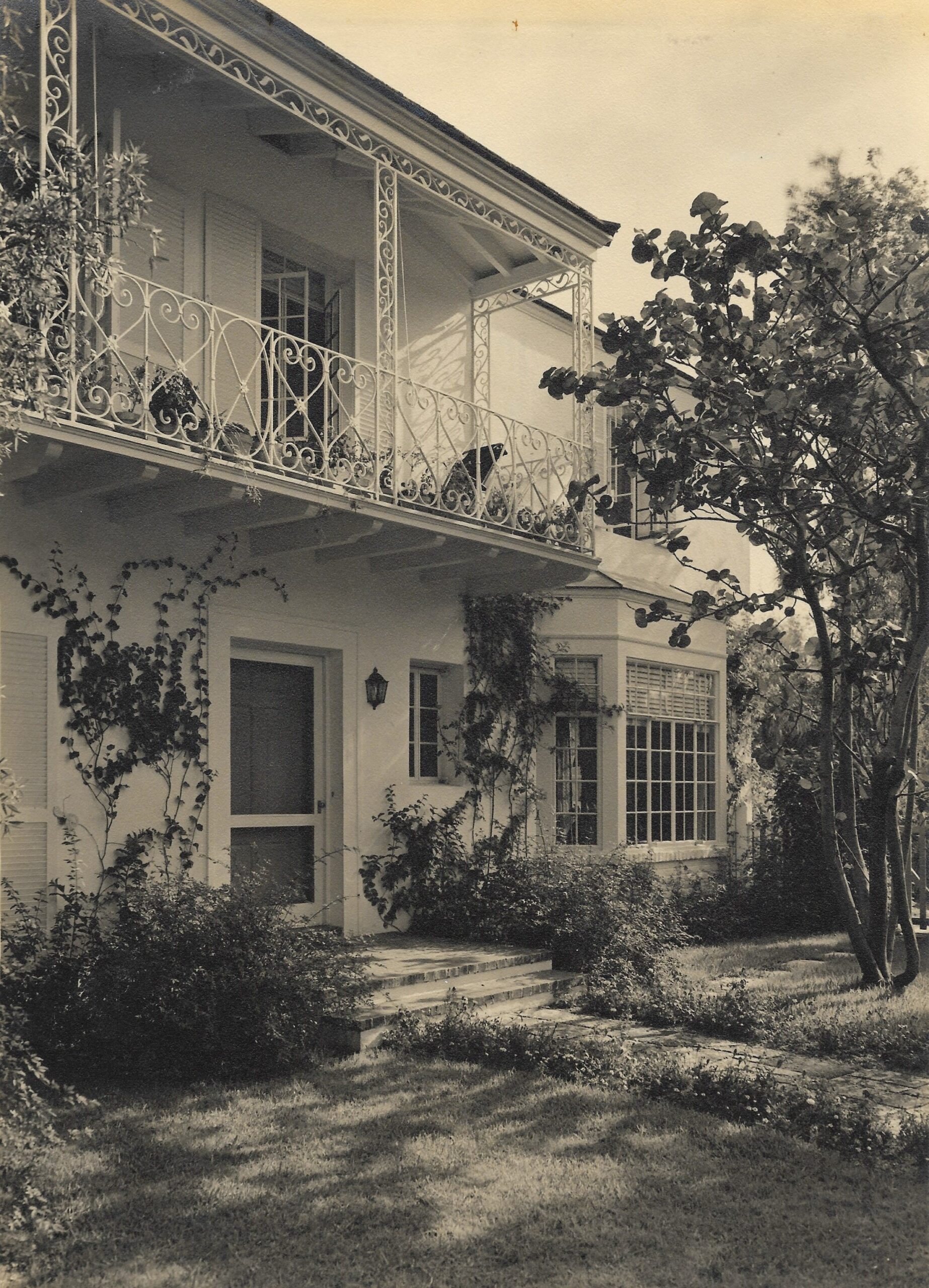
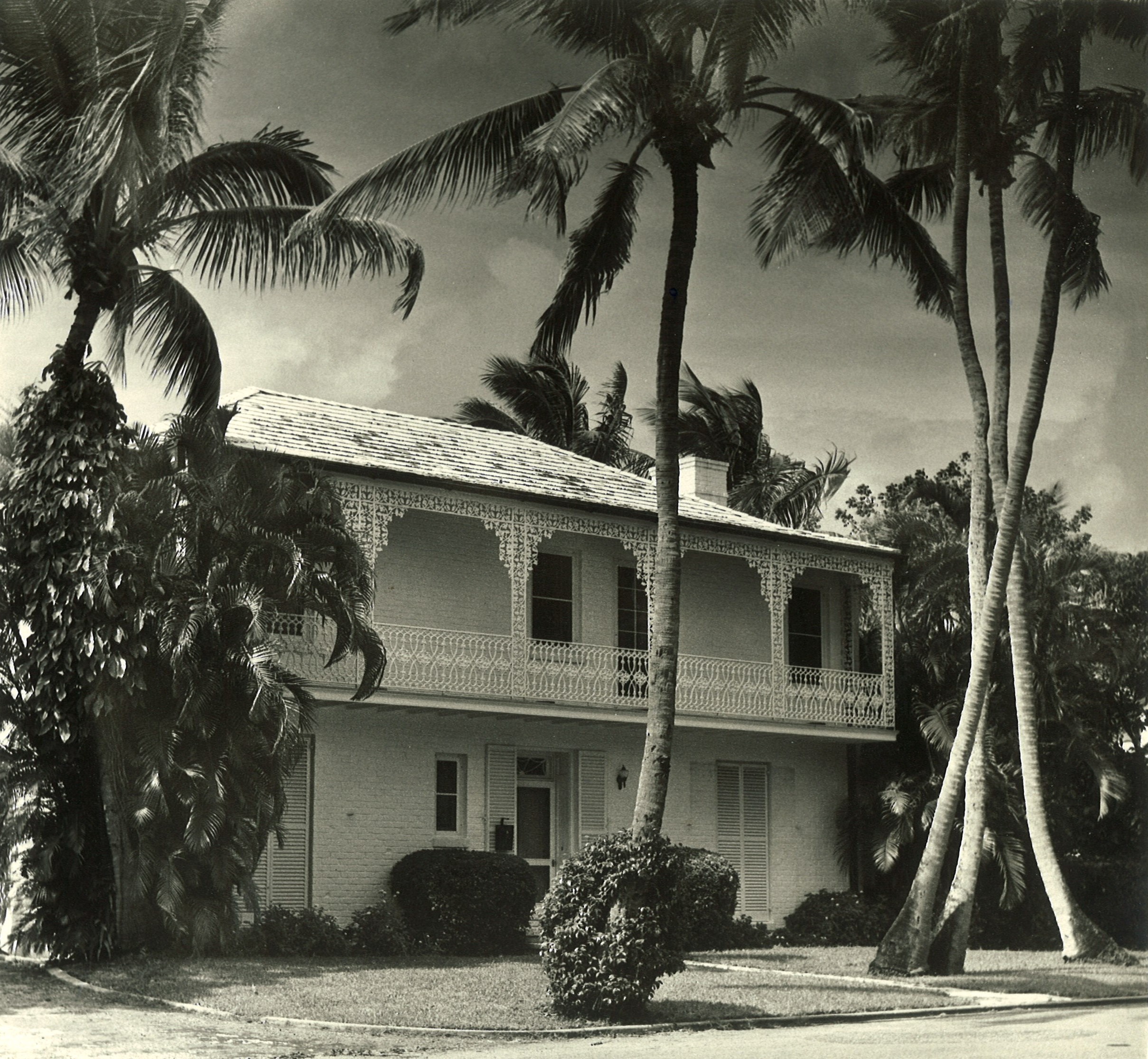
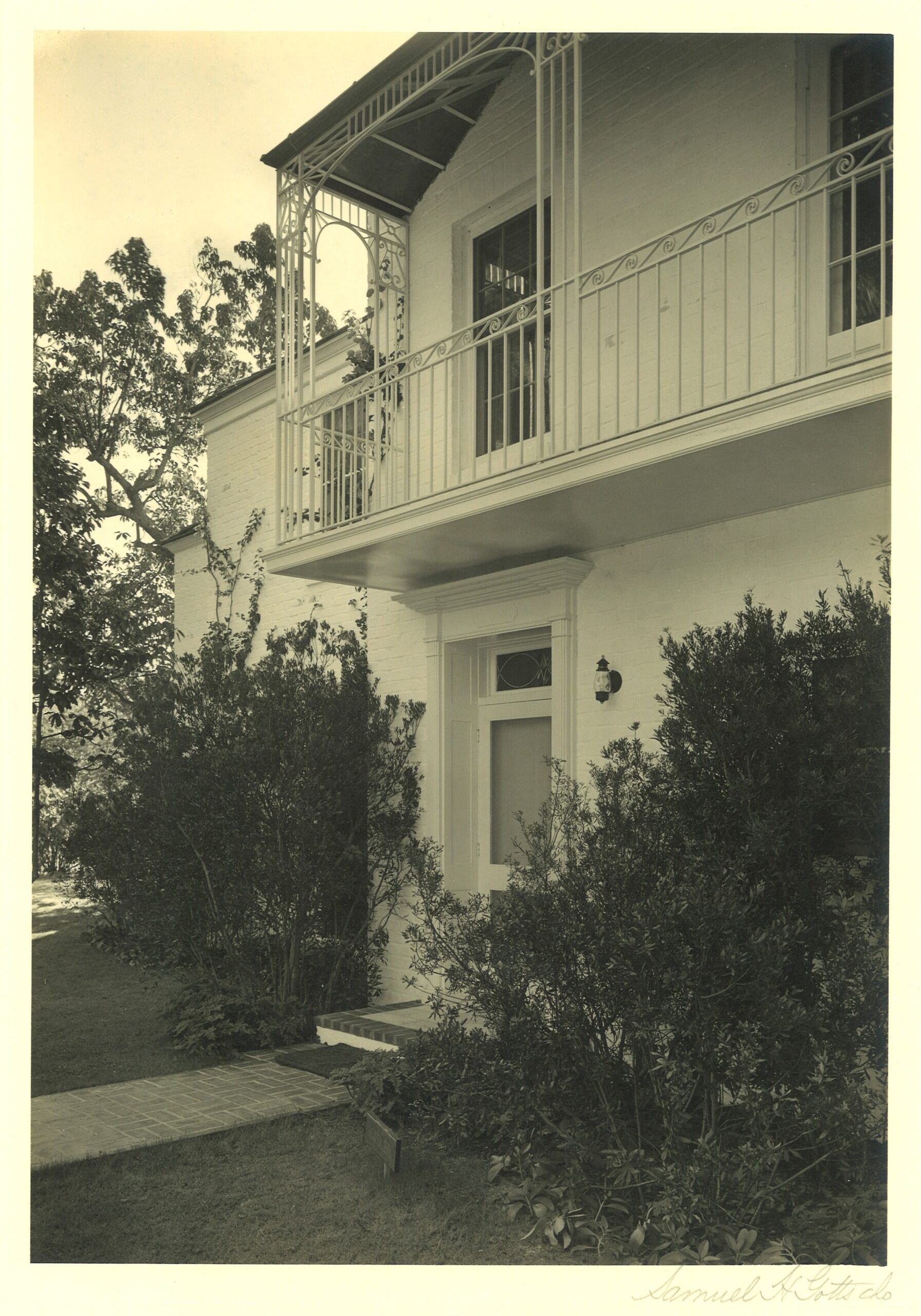
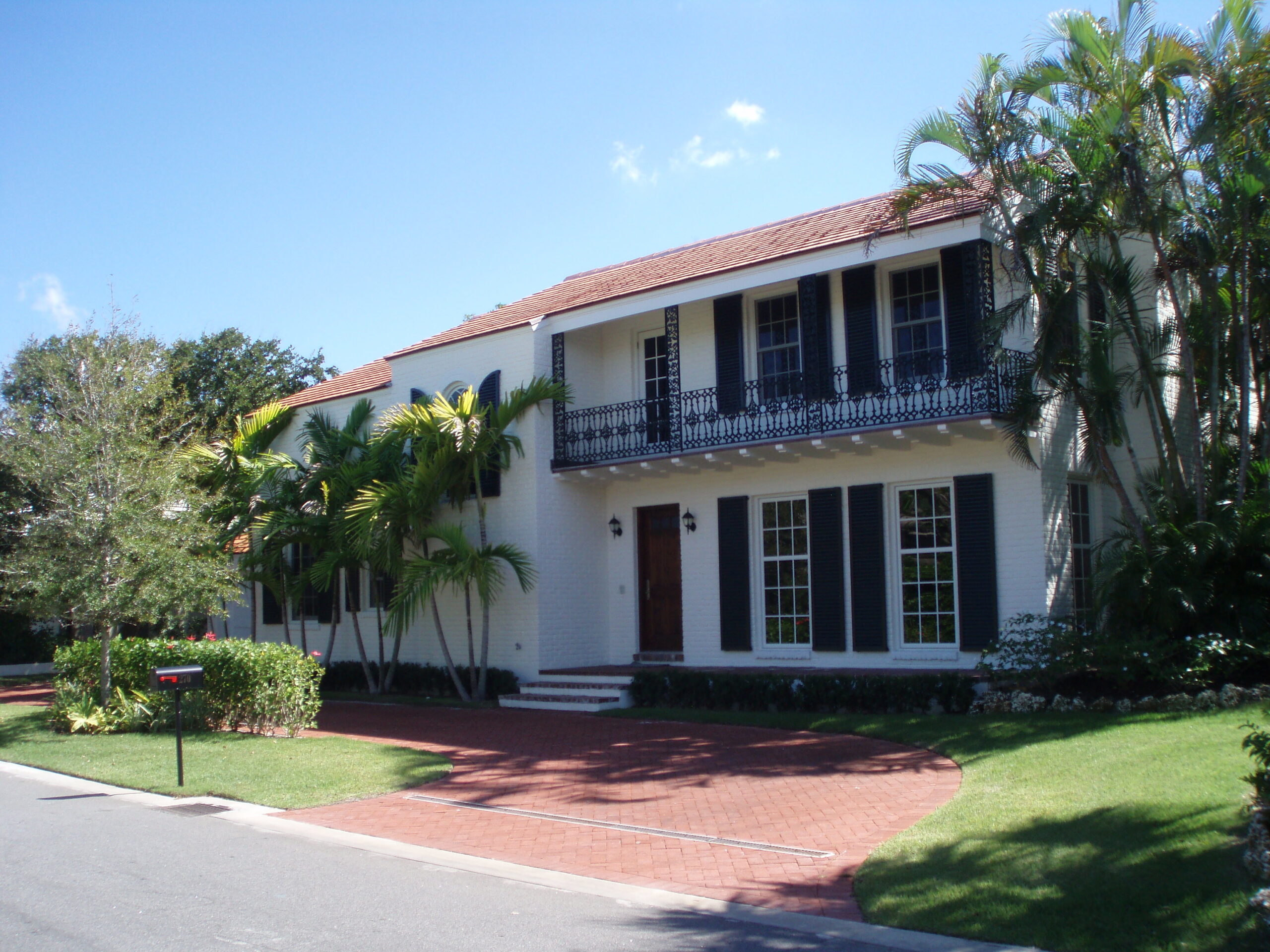
The shifting of architectural trends is cemented in the streetscape, with most architects designing in the Georgian Revival, Monterey, and Colonial Revival styles, incorporating elements unique to their work, such as ornate entryways and wrought iron grillwork, while still maintaining a uniformity in façade and using similar building materials, creating a cohesion that defined the area.
Queens Lane
Queens Lane
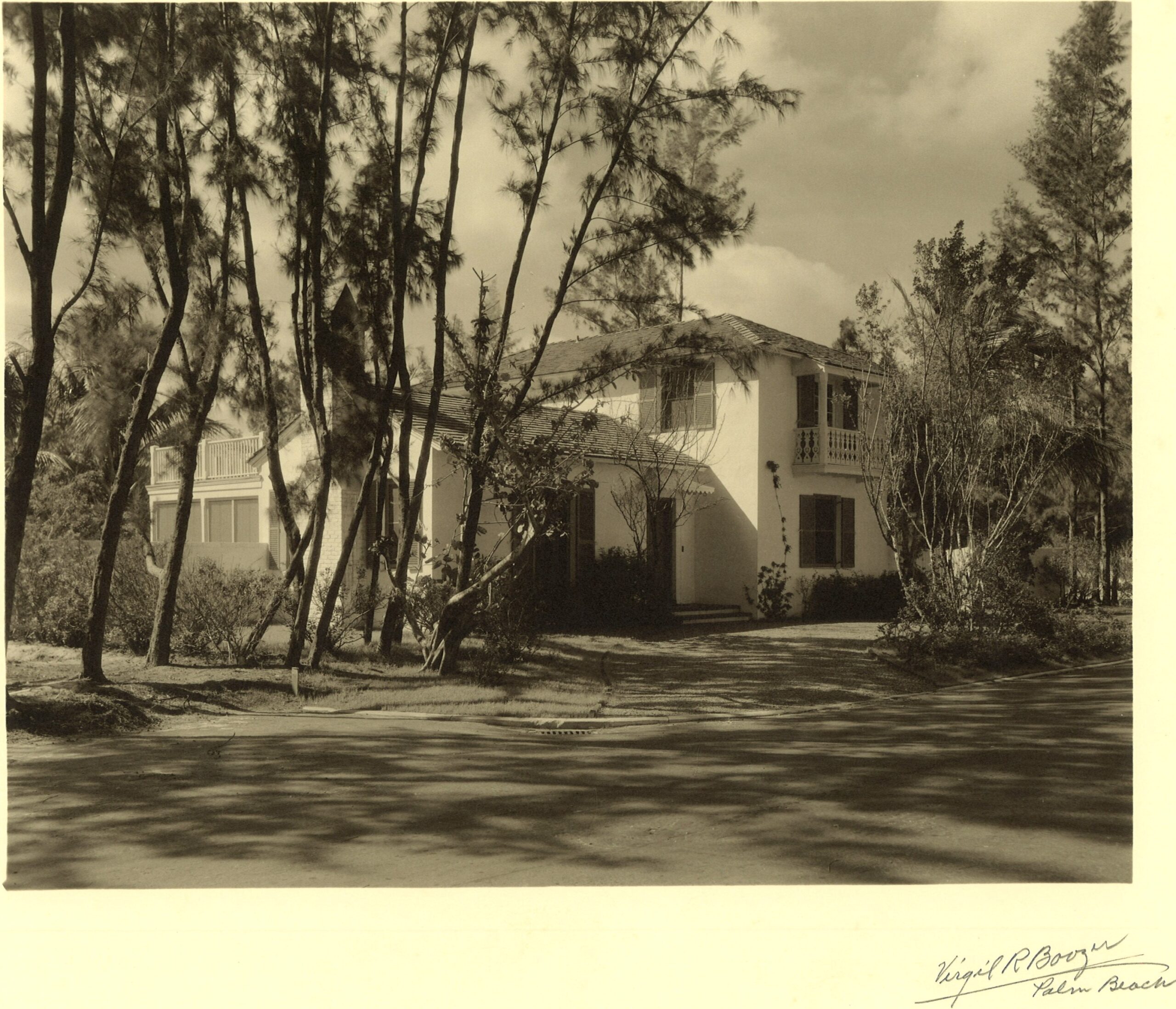
The second Palm Beach Modern Homes, Inc. subdivision was Palm Beach Shores, encompassing the north-end Queens Lane. Initial construction of homes designed by architects including Howard Chilton, Henry Harding, John L. Volk, Howard Major, and Gustav Maass occurred 1935-1941. Palm Beach Shores became a standard for this new era of design in Palm Beach, emphasizing livable homes in elegant, refined styles, prioritizing distinction of architects and privacy of those who lived within its bounds. Homes on this street were smaller, more affordable, and more livable, catering to the trends of longer seasons in Palm Beach and a desire for secluded living that began in the early 1930s.
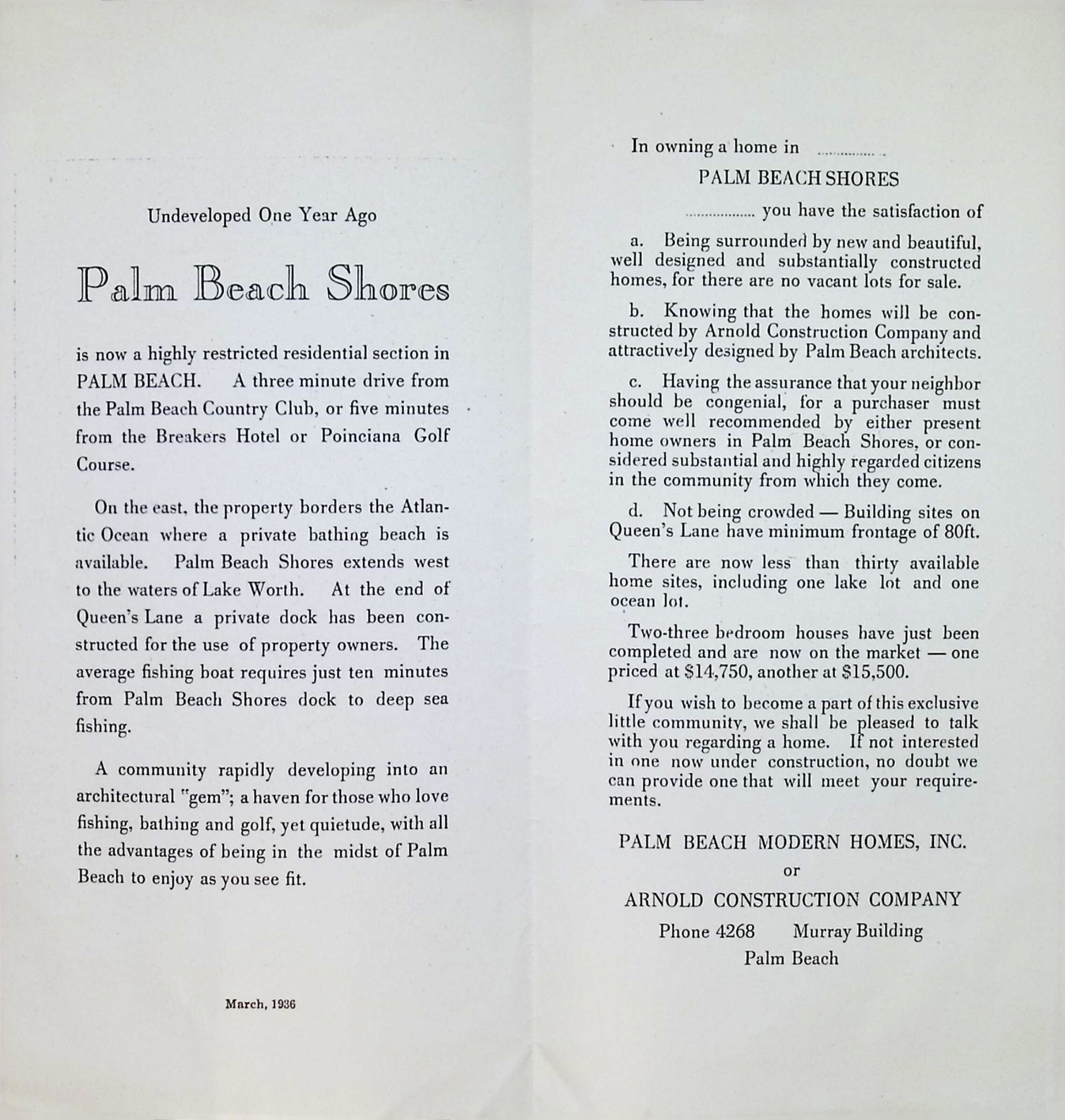
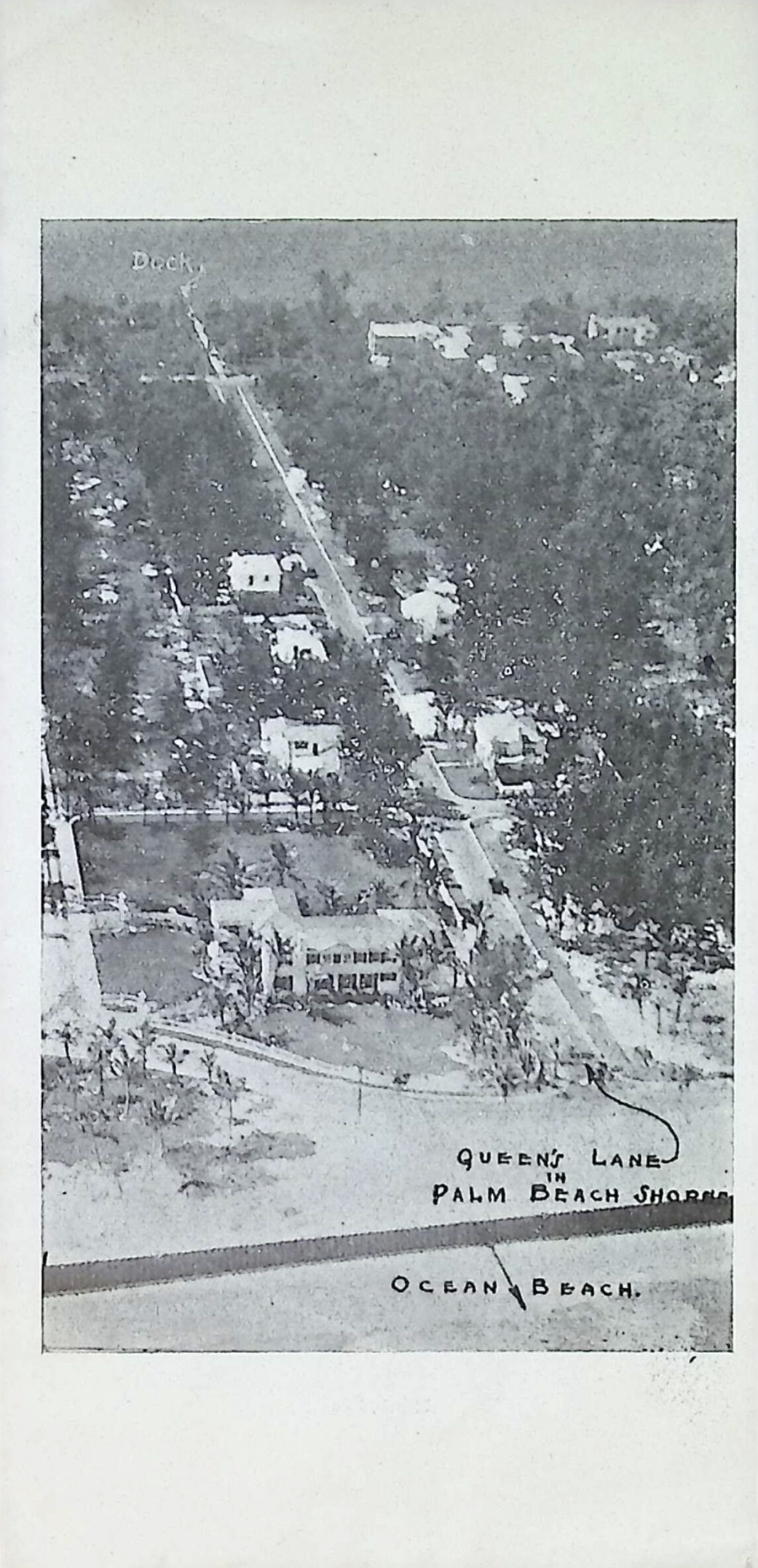
While construction of homes on Queens Lane moved later than that of Pendleton, with the latest homes built in the 1980s and 1990s, development on the street maintained the unified style set by the Palm Beach Shores development of the 1930s-1940s, indicating the lasting impact of this design trend.
Emerging Styles: The Palm Beach Interpretation
Emerging Styles: The Palm Beach Interpretation
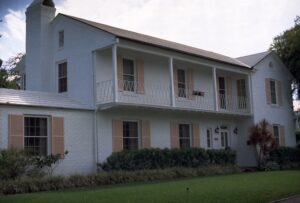
While architectural styles are defined by set elements which make them stand apart, Palm Beach architects have always taken these designs as a starting point instead of strict rules, creating unique variations of traditional styles, or blending elements of multiple styles together. These homes, on Pendleton and Queens, reflect the way that architects took styles popular at the time in American architecture and made them better suited to the landscape and culture of Palm Beach.
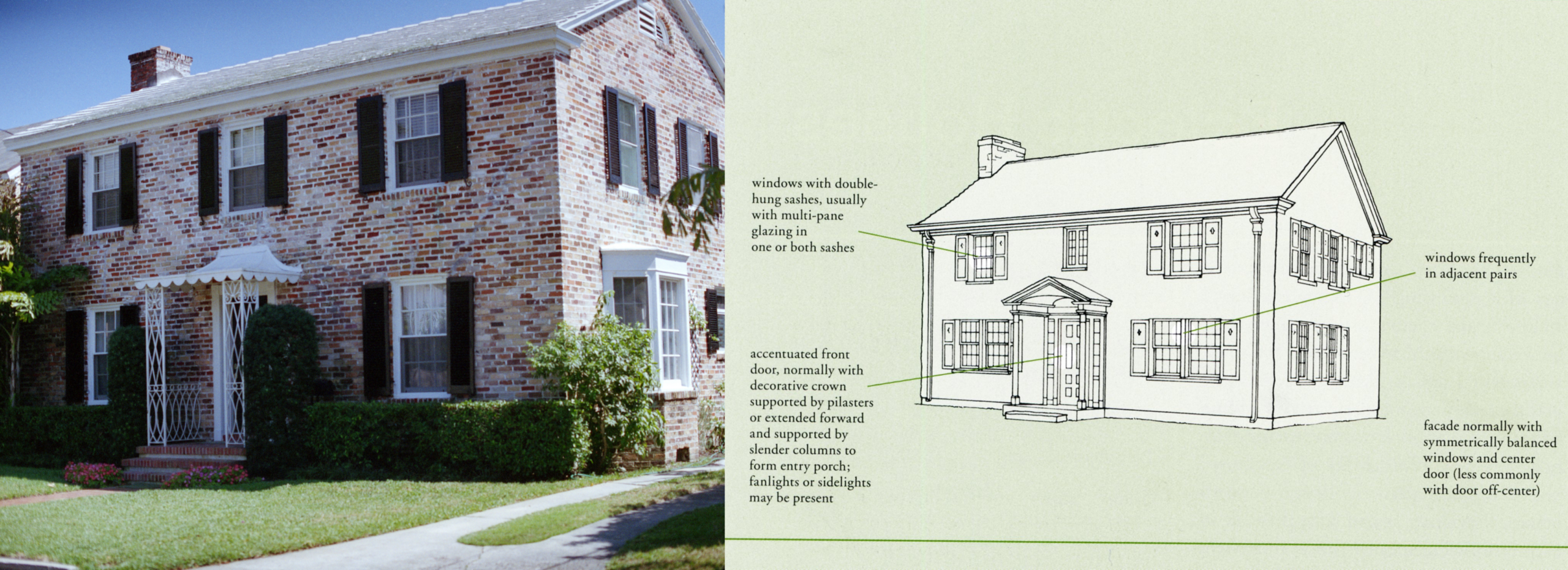
Colonial Revival
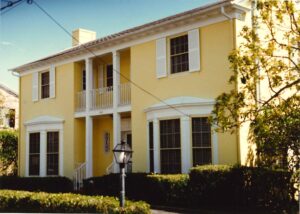
Popular throughout both the Caribbean and the United States in the early-mid 20th century, Colonial Revival is defined by simplistic, highly symmetrical two-story buildings. Homes typically have hipped roofs, and facades can feature quoins. Most notable is the front door, with a decorative crown roof that can be freestanding or supported by columns. Decorative roofs are also seen over front-facing windows.
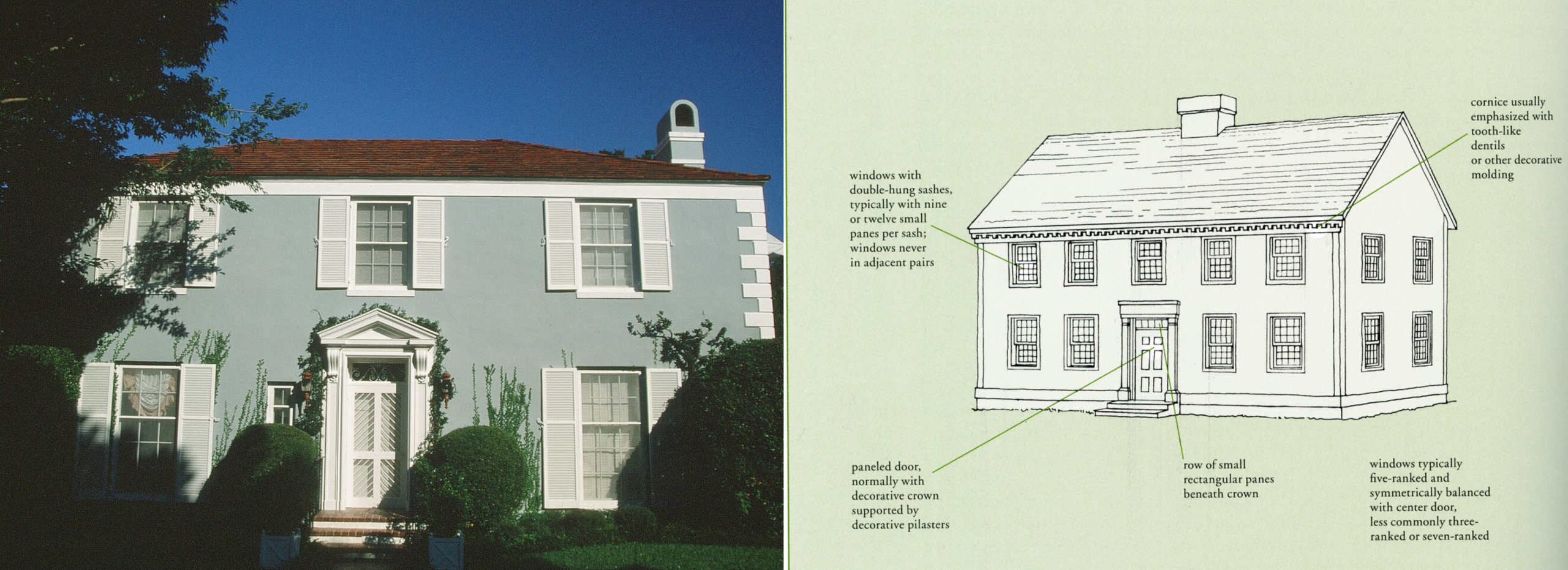
Georgian Revival
Georgian architecture first swept Colonial America and experienced a revival in the late 19th-20th centuries. Like Colonial Revival, buildings are two-story and highly symmetrical, with classic detailing. Georgian homes are defined by paneled doors topped with elaborate decorative crowns. Windows may sit above or below the crowns, and they are sometimes supported by decorative pilasters, or flattened columns.
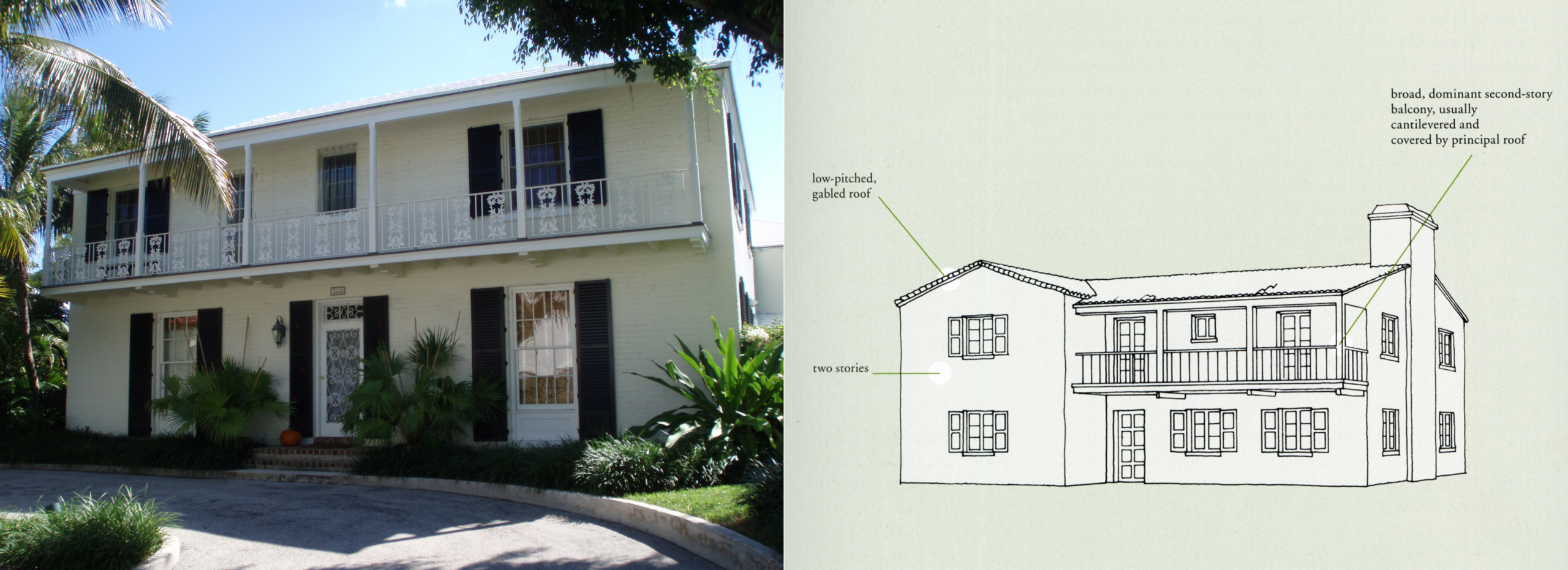
Monterey Revival
Popularized in the 1920s-1950s, Monterey homes are two stories, defined by a second floor, typically cantilevered, open air balcony covered by the principal roof. Roofs are low-pitched and gabled or hipped, variants sometimes feature tiles, and exterior walls are constructed in stucco, brick, or wood. The styling of the balcony railing, either in wood or iron, gives each home a sense of individuality, and often will incorporate Creole French or British Colonial styles.
Landmarking & Lasting Impact
Landmarking & Lasting Impact
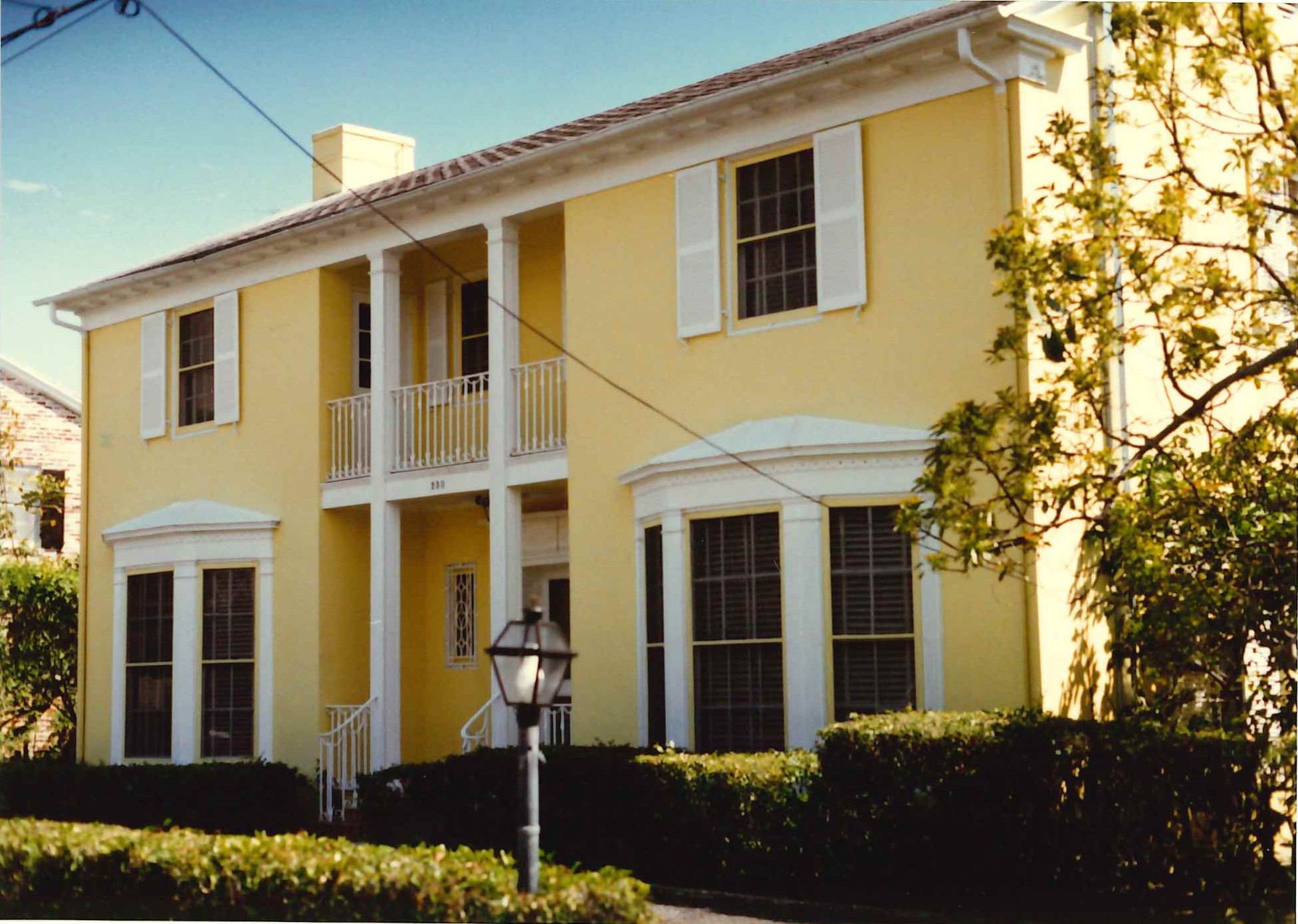
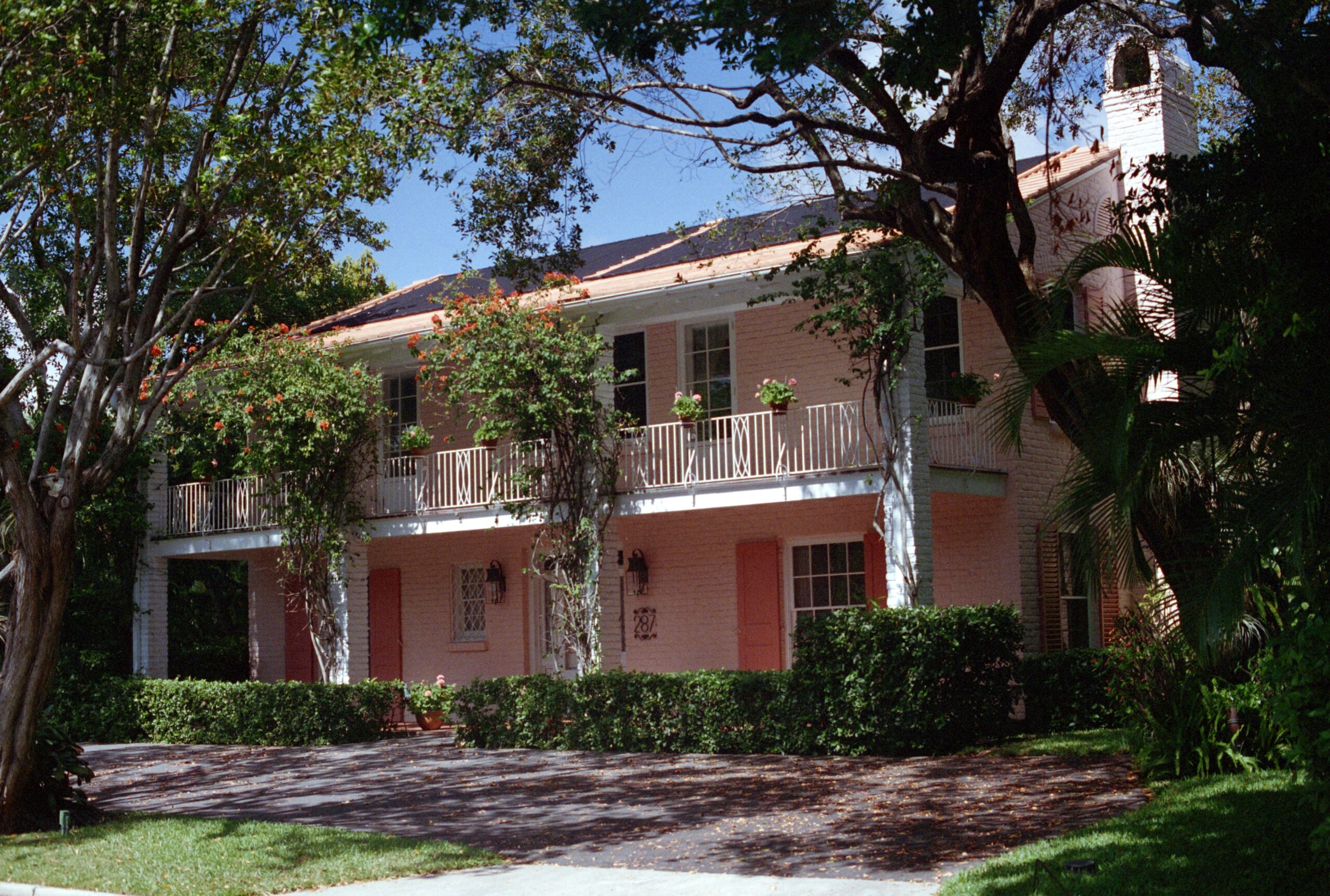
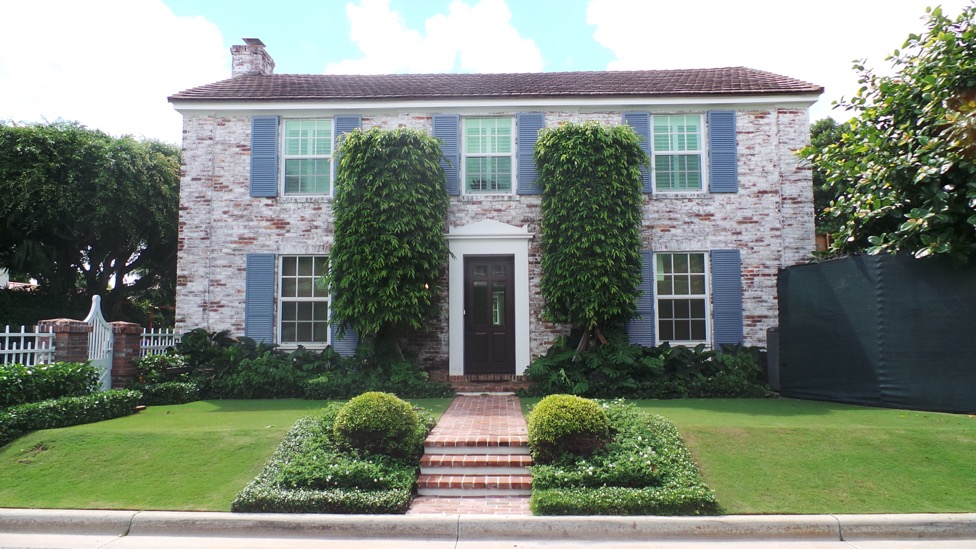
In 1999, there was an attempt to designate Pendleton Avenue and Pendleton Lane as a Historic District. Emphasizing the compatibility of multiple architects’ work, and the cohesion of the history, style, and scale of the homes on the street, major individuals working in historic preservation in Palm Beach conducted a thorough survey of the homes and landscape. While the effort was denied by Town Council, and ultimately was never revisited, multiple individual homes on Pendleton and Queens have received Landmark Designation, or Historically Significant Building status.
Not only are these homes significant for their history, but the introduction of these new architectural styles provided an alternative for residents and architects to Mediterranean Revival.
1999 Pendleton Historic District Proposal
This video, filmed by Dr. Jane S. Day, a former landmarks consultant for the Town of Palm Beach, explores the homes along Pendleton Avenue and Pendleton Lane for a historic district proposed in 1999. Each home’s architect, architectural style, and year built is shown.